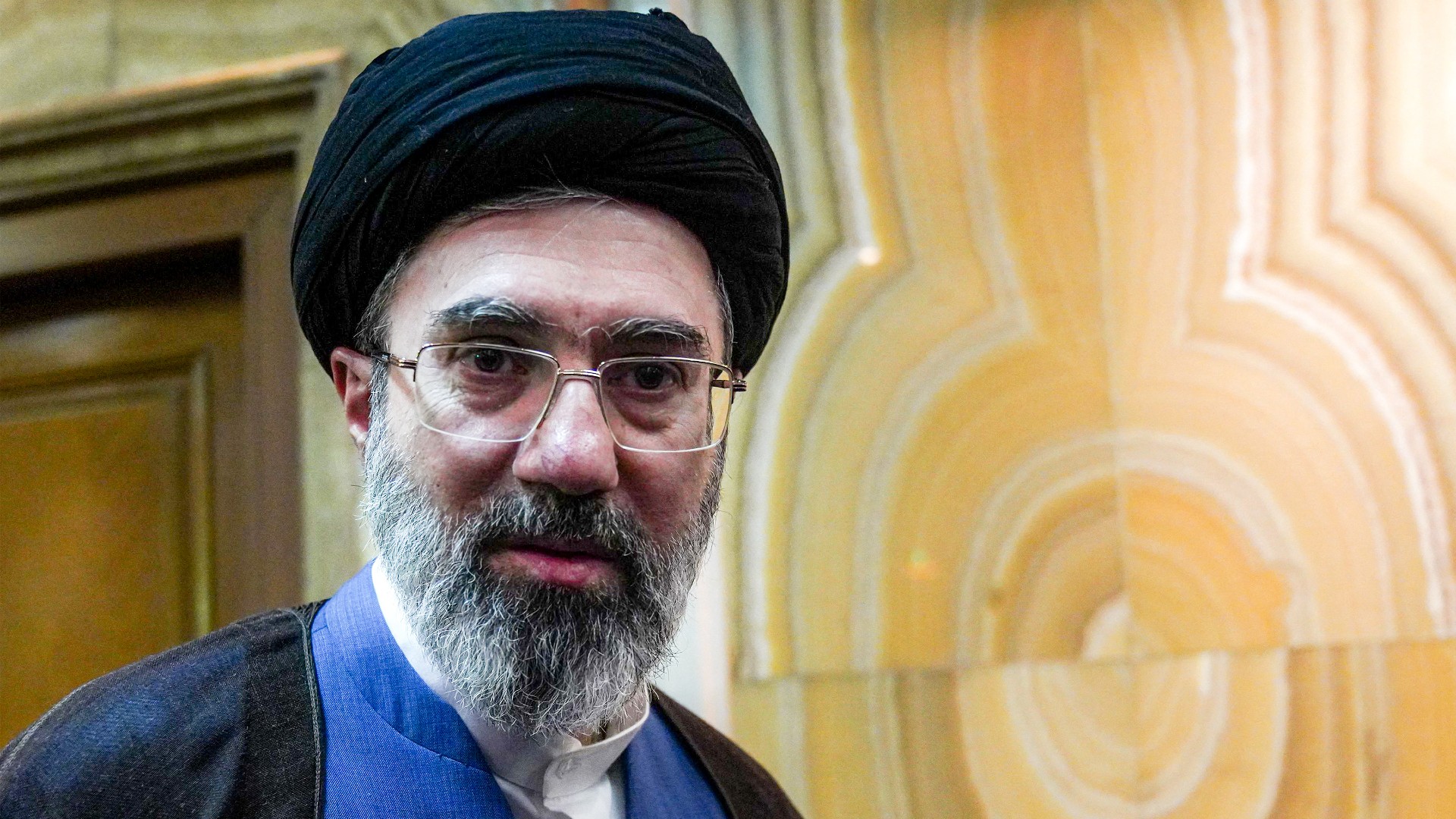
In his inaugural address as Iran’s newly appointed Supreme Leader, Ayatollah Mojtaba Khamenei has delivered a stark warning to regional powers, demanding the immediate closure of all US military installations throughout the Middle East. The statement, broadcast through Iran’s state-controlled IRIB network, marked the first public communication from the successor to the assassinated Ayatollah Ali Khamenei.
The reclusive leader, who had remained unseen since the outbreak of recent hostilities, articulated a dual-track approach to regional relations. While expressing Tehran’s commitment to ‘unity and warm relations with its neighbors,’ Khamenei simultaneously issued an unambiguous threat: ‘The countries of the region must close down the US military bases; otherwise, we will be forced to attack them again.’
Strategic waterways emerged as a central component of Iran’s declared defense strategy. Khamenei explicitly reaffirmed Iran’s continued utilization of the ‘lever of blocking the Strait of Hormuz’ – the critical maritime passage through which approximately 20% of global oil output and one-third of liquefied natural gas shipments transit. This declaration follows over a week of effective closure, with Iranian forces threatening to attack any vessel attempting navigation through the strategic chokepoint.
The new Supreme Leader outlined an expanded conception of military engagement, referencing ‘other fronts’ where Iran possesses strategic advantages. He specifically acknowledged potential coordination with Ansar Allah (Houthi) forces in Yemen and armed factions in Iraq, though concrete intervention from these groups remains unconfirmed.
Khamenei announced comprehensive support measures for conflict casualties, promising free medical treatment and financial compensation funded through war reparations. In a significant escalation of financial rhetoric, he declared: ‘We will take war reparations from the enemy for the war it imposed on us. If the enemy refuses, we will seize as much of its assets as we deem appropriate; and if that is not possible, we will destroy an equivalent amount of its property.’
The leadership transition follows the February 28th airstrike that killed Ayatollah Ali Khamenei along with several family members, including the new leader’s wife Zahra Adel, his mother Mansoureh Khojasteh Bagherzadeh, and other relatives. Born in 1969 in the religious center of Mashhad, Mojtaba Khamenei represents both dynastic continuity and theological legitimacy as the grandson of Shia scholar Sayyed Javad Khamenei.
His background reflects deep integration within Iran’s power structures. Educated in Qom’s prestigious seminaries under prominent Islamic scholars, Khamenei built his reputation through theological teaching rather than governmental service. His marriage to Zahra Haddad-Adel, daughter of influential conservative politician Gholam-Ali Haddad-Adel, further solidified his position within Iran’s ruling elite, despite his avoidance of elected office.