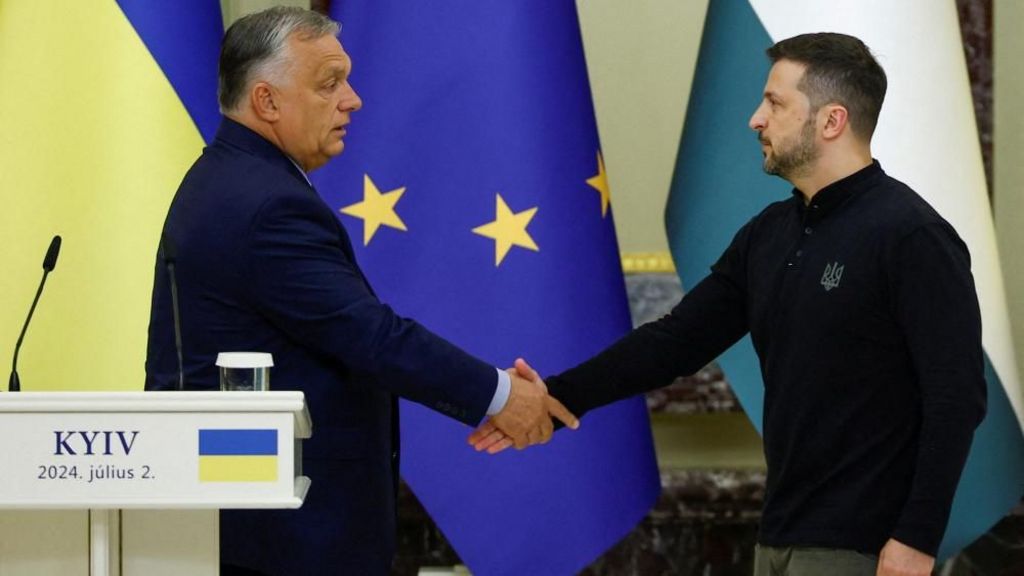
With Hungary’s parliamentary election merely 30 days away, the nation finds itself engulfed in an unprecedented disinformation war involving Prime Minister Viktor Orbán’s government, Ukraine, and Kremlin-linked actors. The political atmosphere has reached a fever pitch, characterized by extraordinary allegations and counter-allegations that threaten to destabilize regional diplomacy.
The Hungarian government has launched a series of severe accusations against Ukraine, claiming the war-torn nation is preparing physical violence against Prime Minister Orbán and his family while allegedly planning attacks on critical energy infrastructure. Ministers assert that Ukraine ‘will stop at nothing’ to prevent Orbán’s Fidesz party from securing victory in the upcoming April 12 election.
Ukraine has responded with equally serious charges, accusing the Hungarian government of orchestrating a deliberate hate campaign to frighten Hungarian voters into supporting Fidesz. This diplomatic crisis has created a perfect environment for Russian interference, with The Financial Times reporting that the Kremlin-linked Social Design Agency is preparing a mass disinformation campaign in Hungary to bolster Orbán and discredit the opposition Tisza Party led by Péter Magyar.
At the heart of this geopolitical standoff lies the disrupted Druzhba (Friendship) pipeline, a critical energy artery for Hungarian and Slovak refineries. Oil deliveries ceased on January 27 following a Russian drone strike that damaged the Brody oil hub in western Ukraine. Prime Minister Orbán has presented satellite images claiming the pipeline remains intact, accusing Ukraine of deliberately delaying repairs to create fuel shortages that would harm his re-election prospects.
However, security analyst András Rácz of the German Council on Foreign Relations challenges this narrative, revealing that the January attack damaged an oil tank containing 75 million liters of crude oil. To prevent environmental disaster, this oil was pumped into the pipeline for storage—creating technical complications that Ukraine says may require six weeks to repair.
The election campaign has manifested through disturbing propaganda techniques, including AI-generated Fidesz videos depicting execution squads and suggesting similar fates await Hungarians who vote for the opposition. Giant billboards across Hungary show Ukrainian President Volodymyr Zelenskyy alongside Péter Magyar, falsely accusing Tisza of planning to involve Hungary directly in the Ukraine war.
In a highly unusual peacetime measure, the Hungarian army has been deployed to patrol key energy installations—presented as reassurance to the public by Fidesz but characterized as intimidation by opposition voices. The situation escalated further when Zelenskyy remarked that those blocking EU aid might find themselves visited by Ukrainian armed forces ‘speaking in their own language’—a comment Orbán interpreted as a direct threat.
The confrontation reached new heights when Hungarian anti-terror troops seized two vehicles belonging to Ukraine’s state savings bank crossing into Hungary, while a supposed Hungarian ‘fact-finding mission’ to inspect the pipeline was dismissed by Ukraine as mere tourists without official status.
With Fidesz trailing Tisza 39% to 50% in recent polls, analysts are divided whether Orbán’s anti-Ukraine rhetoric represents panic in the face of probable defeat or a calculated strategy to mobilize his base by creating a sense of national emergency.