China’s energy security framework faces its most significant challenge in 2026 as geopolitical disruptions threaten global oil markets. The detention of Venezuelan leader Nicolás Maduro in January, followed by coordinated US-Israeli military operations against Iran beginning in late February, has severely impacted two crucial sources of China’s oil imports.
The escalating Middle Eastern conflict has damaged critical energy infrastructure, causing oil prices to surge above $100 per barrel when markets opened on March 9. Although prices subsequently retreated from this peak, they remain substantially elevated from the $60 baseline recorded at the beginning of the year.
Despite assertions from US President Donald Trump predicting a swift resolution, the crisis shows no signs of abatement. Attacks have targeted Iranian oil facilities and those of US-aligned Gulf States, while tanker traffic through the strategically vital Strait of Hormuz—a critical global oil artery—has experienced significant reduction. Approximately one-fifth of global oil trade normally transits this waterway, and its current vulnerability has prompted numerous nations to implement emergency measures addressing the energy shortage.
For China, the world’s largest energy consumer accounting for 27% of global energy consumption in 2024, these developments present particular concerns. The nation’s technologically advanced, expanding economy and population exceeding 1.4 billion require immense energy resources to sustain growth. China’s electricity usage in 2025 more than doubled that of the United States, while Iran alone provides 13% of China’s crude oil imports, with Venezuela supplying an additional 4%.
China maintains strategic petroleum reserves estimated to provide approximately 120 days of supply, slightly less than the US Strategic Petroleum Reserve established following the 1970s Arab oil embargo. The International Energy Agency member nations decided on March 11 to release stockpiled oil to address acute market disruptions caused by the conflict.
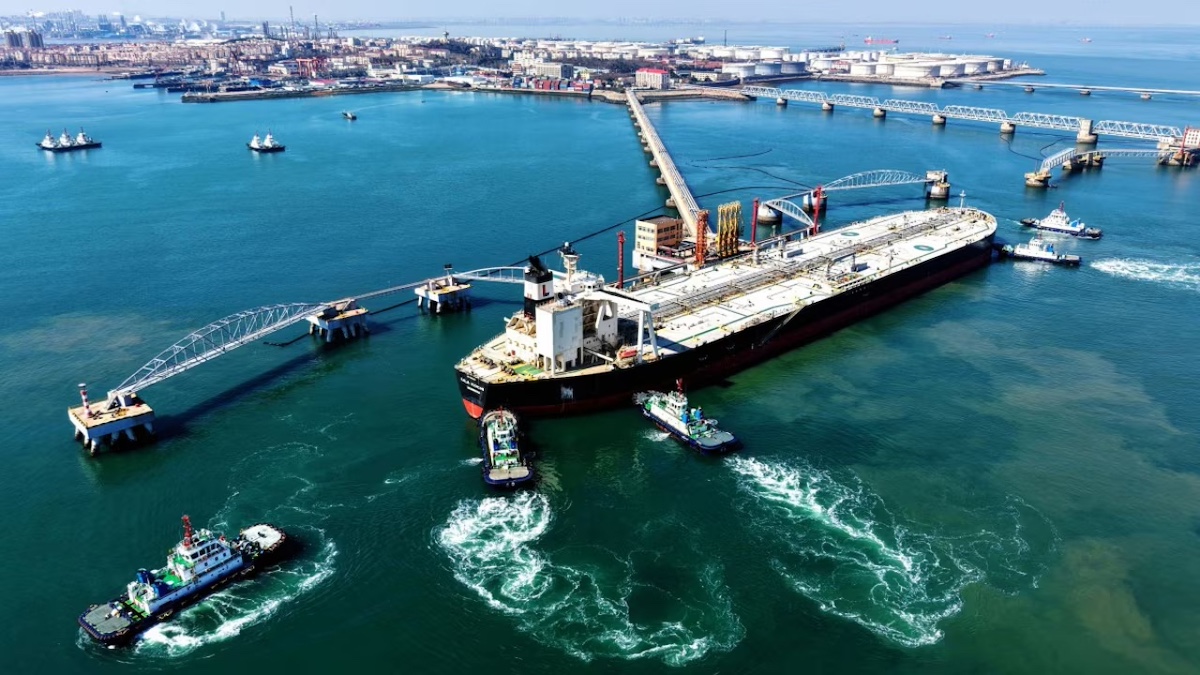
China’s vulnerability stems from its substantial external dependence, importing roughly 70% of its oil primarily via maritime routes. According to the Georgetown Journal of International Affairs, 90% of Chinese trade and 80% of oil imports travel by sea, highlighting the strategic significance of securing vital ‘sea lines of communication’ often discussed as the ‘Malacca Dilemma.’
Chinese strategists frequently note that critical maritime chokepoints including the Strait of Malacca, Strait of Hormuz, and Suez and Panama canals handle 60-80% of China’s imported oil and liquefied natural gas. Qatar’s shutdown of several gas facilities has eliminated 20% of global LNG exports, particularly impactful for China, the world’s largest LNG importer that sourced approximately one-quarter of its LNG from Qatar in 2025.
Russia emerges as a crucial alternative supplier insulated from maritime disruptions, with energy infrastructure connecting the two nations across their vast land border. Moscow’s increased dependence on Chinese markets following Western sanctions related to the Ukraine war has strengthened Beijing’s bargaining position in energy negotiations.
China’s demographic trends, including population decline since 2022, are expected to reduce energy demand over the next decade, potentially bringing peak oil consumption before 2030. Domestically, coal continues to provide approximately 60% of China’s energy consumption and electricity generation, offering important energy security despite environmental costs.
Substantial investments in renewable energy have improved China’s position, with the nation now manufacturing 60% of global wind turbines and 80% of solar panels according to Yale School of Environment data. Electric vehicle adoption continues to accelerate, with EVs outselling conventional cars in China since 2025, reducing transportation sector oil consumption.
Despite these advances, fossil fuels will remain essential for decades according to China National Petroleum Corporation research, particularly for petrochemicals and heavy industry. Unlike the Soviet Union during the Cold War, China’s reliance on imported fuel and limited power projection capabilities leave it vulnerable as it positions itself as a geopolitical rival to the US.
Beijing is expanding military capabilities to protect energy routes, increasing naval presence in the Indian Ocean and Gulf region while modernizing its fleet with plans to operate six additional aircraft carriers by 2035. China also holds significant leverage in critical minerals, controlling substantial global processing capacity for rare earths, lithium, and gallium essential for batteries, solar panels, and advanced electronics.
The ongoing conflict will keep Chinese planners alert as energy shocks ripple through the global economy. China’s combination of massive demand, foreign supply reliance, and ambitious geopolitical goals makes it particularly sensitive to current disruptions. How effectively Beijing manages this crisis could shape regional and global calculations regarding China’s strategic position and resilience.