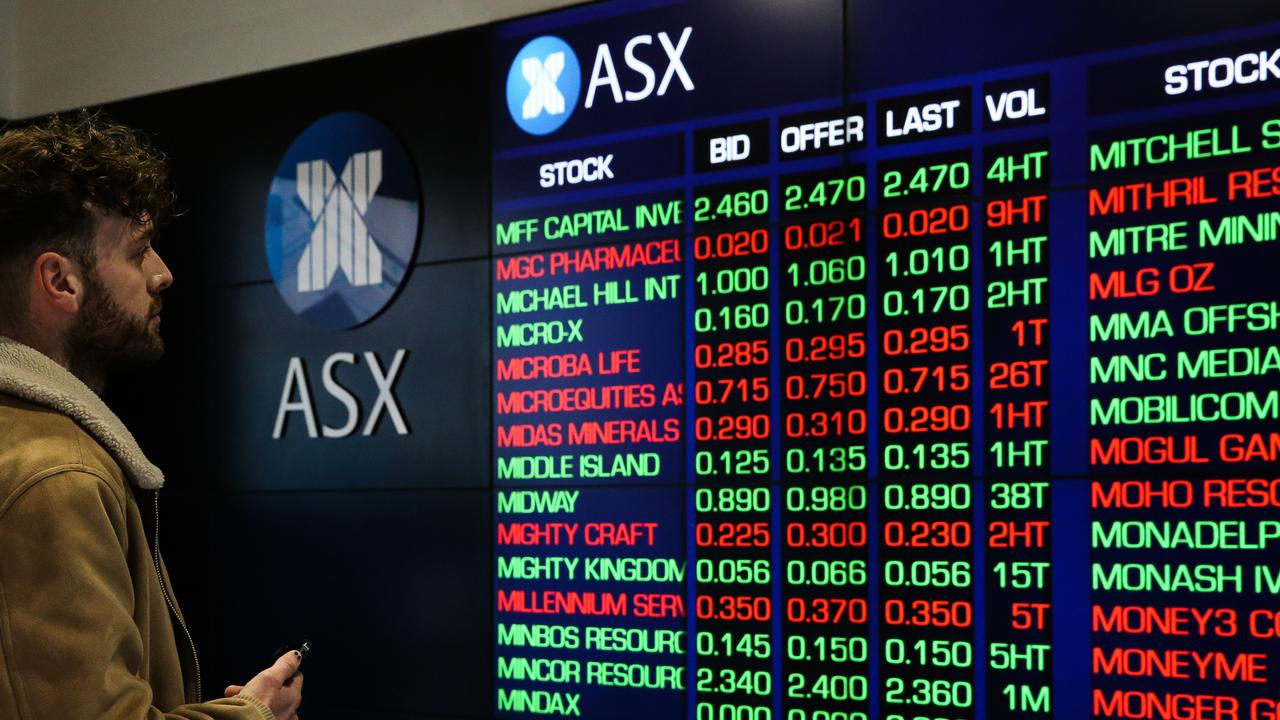
The Australian equities market experienced significant declines on Thursday as surging oil prices defied the largest coordinated emergency reserve release in history, creating heightened volatility across trading sessions.
Market analysts observed trader skepticism toward mixed messaging emerging from the White House regarding Middle Eastern conflicts, particularly comments from former US President Donald Trump characterizing military operations as largely complete. Despite these assertions, benchmark indices recorded substantial losses, with the ASX 200 dropping 109.90 points (1.26%) to 8633.60 and the All Ordinaries declining 122.50 points (1.34%) to 8854.30.
The commodity markets witnessed dramatic movements, with Brent Crude soaring 7.75% to $99.10 per barrel and West Texas Intermediate rallying 7.5% to $93.80 per barrel. This price surge occurred despite the International Energy Agency’s unprecedented announcement that 32 member nations would release 400 million barrels from strategic petroleum reserves—the largest coordinated drawdown since the agency’s establishment following the 1970s oil crisis.
Commonwealth Bank’s head of commodities and sustainability research, Vivek Dhar, provided critical context regarding supply disruptions. His analysis indicates that while 19% of global oil shipments typically transit the Strait of Hormuz, currently only 3-5% of global supply successfully navigates this crucial passage. Dhar projects that oil prices could potentially reach $120-150 per barrel, noting that current market conditions reflect unprecedented supply disruption levels that nearly double previous historical events.
The market volatility throughout the week included a temporary spike to $120 per barrel followed by fluctuations, demonstrating trader uncertainty about both supply stability and geopolitical developments. Experts emphasize that energy markets have yet to fully price in the prolonged disruption potential stemming from ongoing Middle Eastern tensions, creating continued uncertainty for global markets.