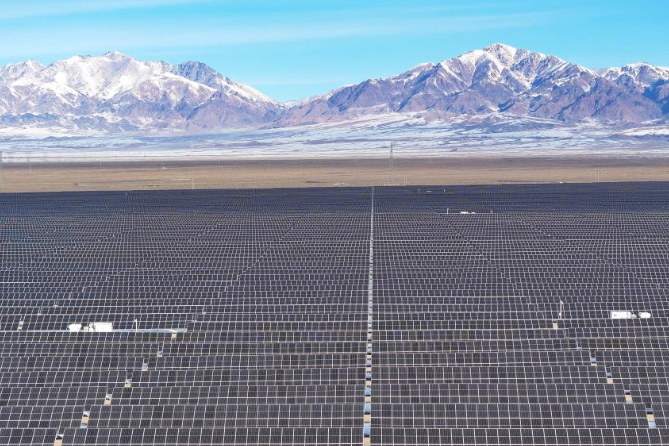
China’s ambitious decarbonization strategy is positioned to significantly influence energy transformation pathways across the Asia-Pacific region, according to energy analysts and regional experts. The comprehensive green development blueprint, formally presented in China’s government work report during the March 5 legislative session, establishes aggressive environmental targets including a 17 percent reduction in carbon intensity between 2026 and 2030.
The policy framework outlines multi-faceted approaches to sustainable development, including the establishment of zero-carbon industrial complexes, creation of a national low-carbon transition fund, and strategic promotion of emerging green technologies including hydrogen power and sustainable fuel alternatives. The plan simultaneously implements stringent regulatory controls on high-emission industrial projects while accelerating nationwide green transition initiatives.
Energy specialists highlight that China’s scale and manufacturing capabilities create unique demonstration value for developing economies throughout Asia. Yang Muyi, senior analyst at global energy think tank Ember, notes that “China’s transition can act as a ladder for progress across the Asia-Pacific, especially for developing economies” by demonstrating how to balance rapid systemic change with energy security requirements.
The decarbonization agenda aligns strategically with recently upgraded regional trade frameworks. Peter TC Chang, formerly of the University of Malaya’s Institute of China Studies, observes that China’s 15th Five-Year Plan coordinates with the enhanced China-ASEAN Free Trade Agreement (CAFTA 3.0), which expanded cooperation into nine sectors including green economy initiatives during the October 2025 summit in Malaysia.
This policy synchronization creates substantial opportunities for renewable energy collaboration, carbon trading mechanisms, and circular economy development between China and ASEAN members. Countries including Indonesia, Malaysia and Vietnam—with their considerable renewable resources and manufacturing capabilities—are particularly well-positioned to integrate into China’s expanding green value chains.
Financial commitments underscore China’s leadership position in clean energy investment, with Ember reporting $625 billion allocated to renewable technologies in 2024 alone—the highest global investment volume. Chinese manufacturers currently produce approximately 60 percent of global wind turbines and 80 percent of solar panels, creating what analysts term a “ladder of affordability” that reduces clean technology costs for developing Asian economies.
The urgency of energy transition has been amplified by geopolitical instability and fossil fuel price volatility, according to Joanna Santa Isabel, Asia network coordinator for environmental organization 350.org. She emphasizes that shifting toward affordable renewable alternatives has evolved from optional strategy to fundamental necessity, driven equally by climate imperatives and economic practicality.