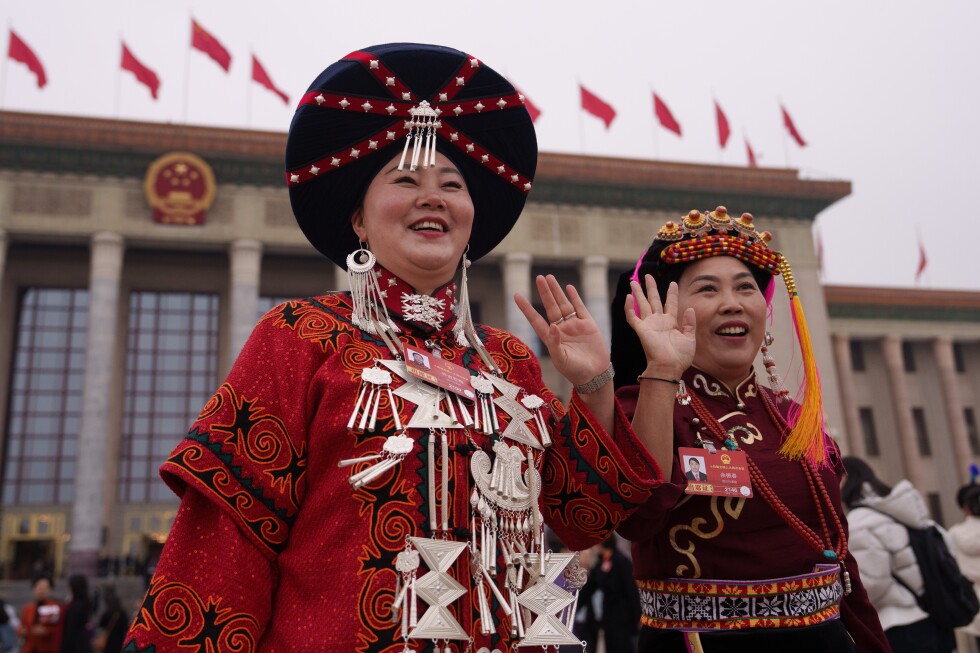
China’s legislative body is poised to enact a comprehensive Ethnic Unity Law that authorities claim will foster national cohesion but critics argue systematically dismantles cultural autonomy for minority groups. The legislation, introduced by National People’s Congress delegate Lou Qinjian, mandates all government entities, private enterprises, and social organizations to actively promote what it terms “a common consciousness of the Chinese nation.”
The controversial measure represents a significant departure from constitutional provisions that previously guaranteed ethnic groups the right to develop their own languages and maintain limited self-rule. Academic experts characterize the law as the culmination of President Xi Jinping’s fundamental restructuring of China’s approach to ethnic relations, effectively nullifying earlier promises of meaningful autonomy.
Central to the legislation is Article 15, which establishes Mandarin Chinese as the mandatory language of instruction from preschool through secondary education nationwide. This provision effectively eliminates minority languages as primary educational mediums, reversing decades of pedagogical practice in regions like Inner Mongolia where curricula were previously taught in local languages.
The law also introduces extraterritorial jurisdiction provisions, allowing Chinese authorities to prosecute individuals and organizations outside China whose actions are perceived as threatening ethnic unity. This legal mechanism parallels the controversial National Security Law imposed on Hong Kong in 2020.
Human rights advocates and legal scholars express grave concerns about the legislation’s implications. Rayhan Asat, a Harvard legal scholar whose brother received a 15-year prison sentence in Xinjiang, warns the law provides pretext for systematic human rights violations against minority populations, particularly Uyghur Muslims who have faced widespread detention campaigns.
The legislation emerges against the backdrop of intensified assimilation policies across minority regions, including the forced migration programs that break up ethnic communities under the guise of creating “mutually embedded community environments.” While China maintains these policies promote development and equality, critics argue they fundamentally undermine cultural preservation and linguistic diversity.