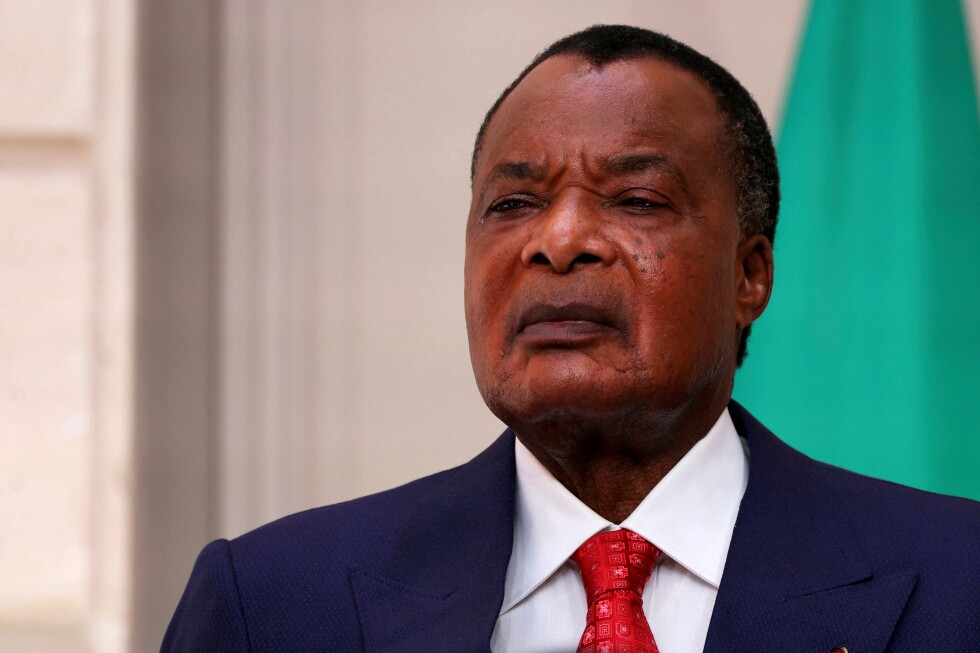
BRAZZAVILLE, Republic of Congo — As the Republic of Congo prepares for its presidential election this weekend, political analysts anticipate a predetermined outcome with incumbent President Denis Sassou N’Guesso poised to secure another term against a fragmented opposition. The 82-year-old leader, who has governed this Central African nation for a cumulative 42 years, faces minimal challenge from six opposition candidates in an electoral process characterized by widespread public disillusionment.
Sassou N’Guesso’s political dominance stems from a complex history: initially taking power in 1979, he briefly lost office after finishing third in the 1992 election before reclaiming control through militia leadership following the 1997 civil war. Constitutional amendments in 2015 eliminated presidential age and term limits, effectively cementing his eligibility for perpetual reelection. He currently ranks as Africa’s third-longest serving ruler, trailing only Cameroon’s Paul Biya and Equatorial Guinea’s Teodoro Obiang Nguema Mbasogo.
The election unfolds against a backdrop of severe economic challenges. Despite the country’s oil wealth, the World Bank reports youth unemployment (ages 15-24) at 41%—nearly double the national average—while the debt-to-GDP ratio has reached 95.4%. This economic distress has fueled electoral apathy, particularly among young citizens who perceive the voting process as meaningless.
Macaire Epoha, a 38-year-old mathematician working odd jobs in Brazzaville, expressed the prevailing sentiment: “N’Guesso will be re-elected with his usual scores, which are close to 80%. The elections have no bearing on young people.” Similarly, geography graduate Cyprien Massamba, who has driven a taxi for a decade, plans to boycott the election to draw international attention to the nation’s economic crisis.
Remadji Hoinathy, senior researcher at the Institute for Security Studies, notes that the election primarily serves to “legitimize power without competition.” Opposition candidates face systematic marginalization through intimidation tactics and alleged electoral manipulation, with two major opposition figures already boycotting the process.
Looking beyond the imminent election, political observers highlight the looming succession question. Given Sassou N’Guesso’s advanced age, this term may represent his final tenure. Attention increasingly focuses on his 51-year-old son, Denis-Christel Sassou Nguesso, currently serving as Minister of International Cooperation, who appears positioned as the political heir.
Despite campaign promises to accelerate development and agricultural modernization, the government’s message fails to resonate with a population where 47% are under 18. As 28-year-old job seeker Coretta Imongui noted: “The system is locked down by the old guard. However, they will not live forever. I still have hope for my children and grandchildren.”