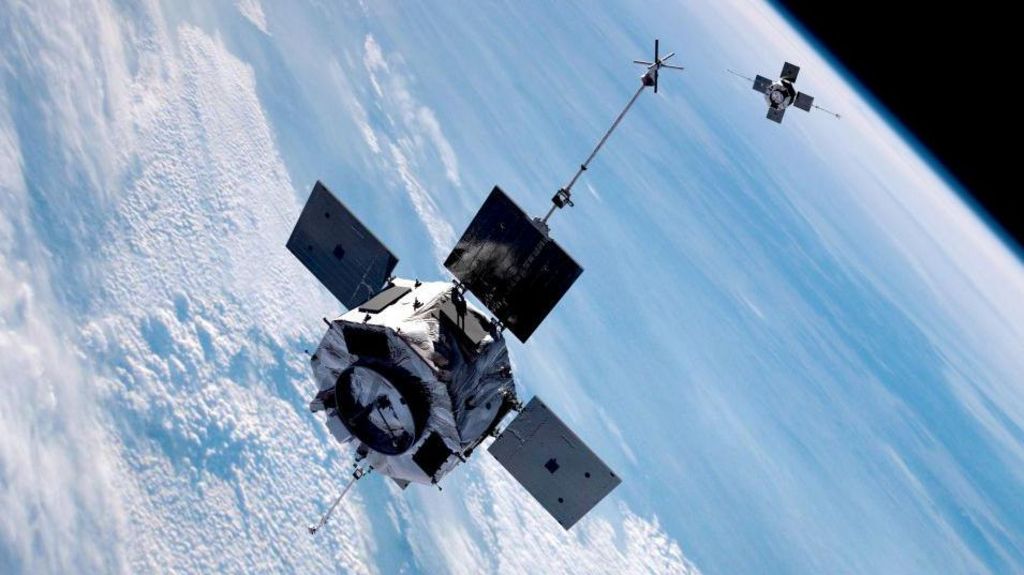
A retired NASA spacecraft is making its final descent toward Earth’s atmosphere nearly 14 years after its landmark launch. The Van Allen Probe A, weighing approximately 1,300 pounds (600 kg), is projected to re-enter atmospheric boundaries around 19:45 EST (00:45 GMT) on Tuesday, according to coordinated predictions from NASA and the U.S. Space Force.
The space agency emphasizes that while precise timing carries a 24-hour uncertainty window, the vast majority of the spacecraft will disintegrate during atmospheric transit. NASA’s risk assessment indicates minimal danger to Earth’s population, calculating approximately a 1 in 4,200 chance of injury from surviving components—a probability characterized as ‘low risk’ by space debris standards.
Originally designed for a two-year operational lifespan, the twin Van Allen Probes (A and B) dramatically exceeded expectations by collecting unprecedented scientific data for nearly seven years. The mission concluded in 2019 when both spacecraft exhausted their fuel reserves and could no longer maintain proper solar orientation.
From 2012 through 2019, these pioneering probes conducted detailed measurements of Earth’s Van Allen radiation belts—concentric rings of charged particles held by the planet’s magnetic field. These natural barriers provide critical protection against cosmic radiation, solar storms, and solar wind emissions that pose threats to both human health and technological infrastructure.
The mission yielded several groundbreaking discoveries, including the first documented evidence of a transient third radiation belt that forms during periods of intense solar activity. This finding significantly advanced scientific understanding of space weather dynamics and their effects on Earth’s magnetosphere.
While Van Allen Probe A completes its final journey, its identical twin remains in orbit and is not expected to re-enter Earth’s atmosphere before 2030. NASA and Space Force personnel continue to monitor the descending spacecraft and will provide updated trajectory predictions as new data becomes available.