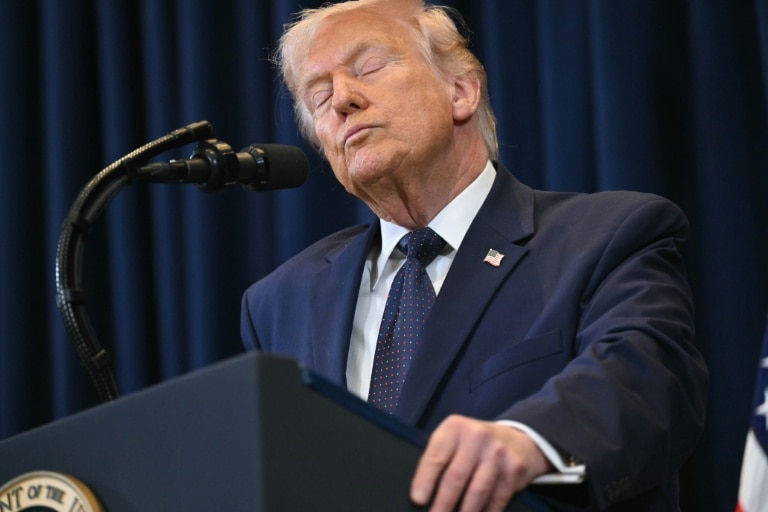
As global oil prices surge and domestic political pressures intensify, President Donald Trump’s approach to the Iran conflict appears increasingly fluid. The commander-in-chief has offered contradictory timelines for the military engagement, initially suggesting a four-to-five week campaign before recently characterizing operations as a “very complete” and “short-term excursion.
This rhetorical shift occurs against a backdrop of concerning economic indicators and precarious midterm election prospects for the Republican Party. Historically low public support for the war compounds these challenges, with fuel prices potentially exacerbating voter discontent over living costs.
Analysts interpret Trump’s ambiguous messaging as evidence of the so-called “TACO” phenomenon (Trump Always Chickens Out), suggesting the president seeks an exit strategy that preserves political capital. Colin Clarke of the Soufan Center predicts an intensive two-week military push followed by a declaration of victory, regardless of tangible outcomes.
The administration’s stated objectives remain equally inconsistent, ranging from unconditional surrender and regime change to securing Gulf oil flows. Officially documented military goals include denuclearization, elimination of ballistic missile capabilities, and curbing regional proxy influence—targets that might provide face-saving justification for disengagement.
Tehran’s response has been characteristically defiant despite significant infrastructure damage from joint US-Israeli strikes. Iranian leadership has mocked Trump’s timeline assertions and threatened Gulf oil supply disruptions. Meanwhile, Israel pursues its own strategic priorities, including energy infrastructure attacks that may not align with Washington’s broader calculations.
The succession of Ayatollah Mojtaba Khamenei following his father’s death presents additional complications. Without visible internal resistance to the new leadership, Operation Epic Fury risks being remembered as superficial military posturing rather than transformative action.
Experts warn that incomplete resolution could yield perilous consequences: a wounded Iranian regime potentially accelerating nuclear ambitions while ethnic insurgencies destabilize the broader Middle East. The administration thus faces not merely political calculations, but decisions that could reshape regional security architectures for decades.