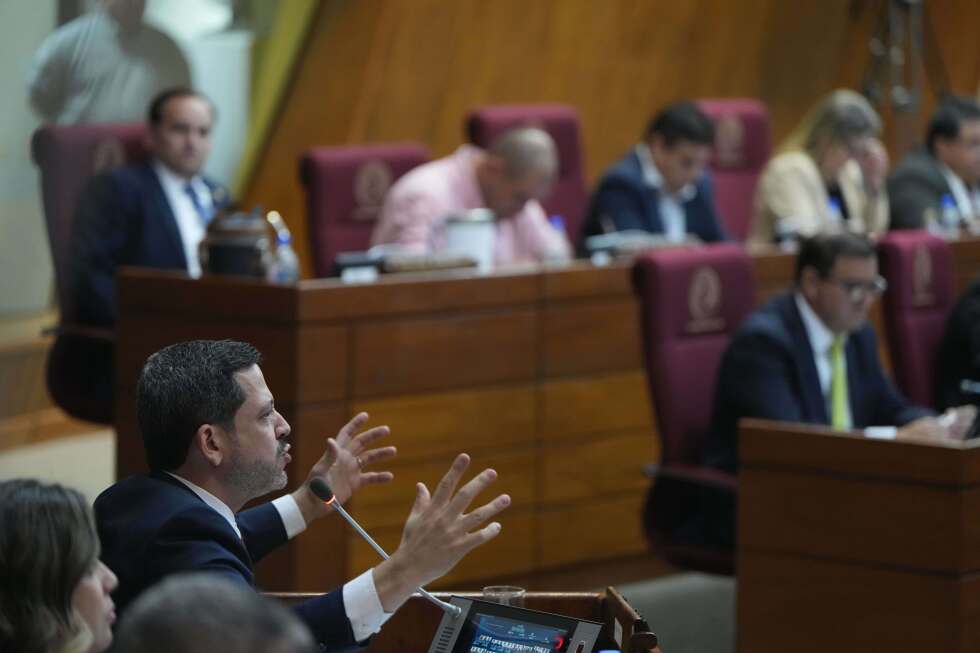
ASUNCIÓN, Paraguay — In a decisive move that strengthens hemispheric security ties, Paraguay’s Chamber of Deputies has overwhelmingly endorsed a defense agreement permitting temporary deployment of United States military and civilian personnel within its territory. The Tuesday ratification marks a significant diplomatic achievement for the Trump administration, which has actively pursued expanded engagement throughout Latin America.
The Status of Forces Agreement (SOFA), previously signed by both nations in Washington during December, received legislative approval with 53 votes in favor versus eight opposing votes. Four ballots were returned blank while fifteen lawmakers abstained from participation. Having already cleared the Paraguayan Senate, the agreement now awaits final endorsement from President Santiago Peña—a recognized regional ally of the Trump administration—who is anticipated to formalize the pact imminently.
This bilateral framework establishes legal parameters for U.S. security forces conducting training operations, joint military exercises, and humanitarian missions within Paraguay. Notably, it extends criminal jurisdiction over American personnel to U.S. authorities, a provision that has ignited substantive debate regarding national sovereignty.
Both U.S. Secretary of State Marco Rubio and Paraguayan Foreign Minister Rubén Ramírez Lezcano have characterized the agreement as “historic,” emphasizing its role in enhancing collaborative efforts against transnational organized crime and terrorism. The Paraguayan government has explicitly clarified that the pact does not authorize establishment of permanent U.S. military bases.
Despite official assurances, opposition legislators and civil society organizations have expressed reservations. Critics highlight concerns over granting foreign troops immunity comparable to diplomatic personnel, arguing that such provisions might undermine judicial sovereignty. Independent congressman Raúl Benítez articulated this perspective, stating: “We believe in international cooperation, but we also believe in strong states, respected institutions and real democratic sovereignty.”
The non-governmental organization Peace and Justice Service, which operates across Latin America, issued a pre-vote statement contending that the agreement “does not represent progress in security, but rather the formalization of a geopolitics of impunity that undermines the pillars of our national dignity.”
This development occurs against the backdrop of increased U.S. diplomatic engagement in Latin America under the Trump administration’s national security priorities, signaling a reorientation of regional defense partnerships.