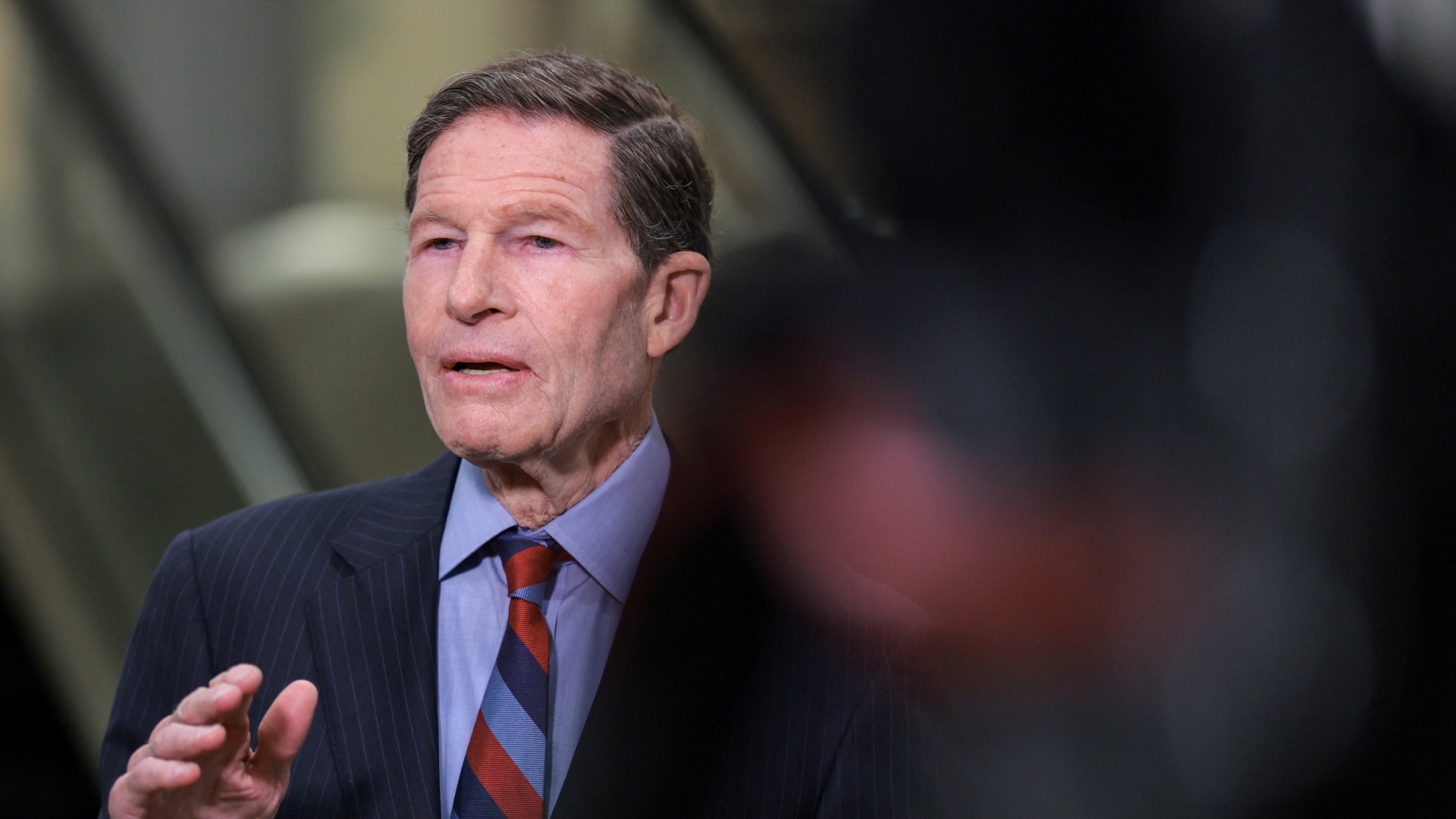
A stark warning has been issued by Democratic Senator Richard Blumenthal, who expressed grave concerns following a classified Senate Armed Services Committee briefing on Tuesday. The senator asserted that the current administration appears to be advancing toward deploying American ground forces in Iran, marking one of the most explicit indications of President Trump’s potential strategic direction in the ongoing conflict.
The context for these apprehensions is underscored by Reuters reporting, citing anonymous sources, that at least 150 U.S. service members have sustained injuries in operations against Iran, with eight fatalities confirmed in the Gulf region. This military campaign, officially designated ‘Operation Epic Fury,’ has proceeded without a publicly articulated clear rationale from the President himself, drawing significant criticism.
Democratic lawmakers have vehemently challenged the administration’s approach, condemning the President for initiating military action without seeking congressional authorization—a constitutional prerogative of the legislature—and for failing to define clear strategic objectives. This criticism is particularly pointed given Trump’s previous condemnations of U.S. military engagements and regime-change operations in the Middle East.
Senator Blumenthal, with fifteen years of Senate tenure, described the briefing as one of the most unsatisfactory he has attended, stating, ‘I emerge from this briefing as dissatisfied and angry, frankly, as I have from any past briefing.’ He emphasized his profound concern for American lives, specifically the potential deployment of ‘our sons and daughters on the ground in Iran.’
Further complicating the geopolitical landscape, Blumenthal accused Russia of actively and intensively aiding Iran ‘with intelligence and perhaps with other means,’ and suggested China might also be providing assistance.
The White House response, delivered by Press Secretary Karoline Leavitt, dismissed the Democrats’ concerns as ‘disingenuous.’ Leavitt defended the President’s prerogative as Commander-in-Chief not to rule out any options and reiterated the administration’s objective to prevent Iran from acquiring a nuclear weapon. While denying the operation is explicitly a regime-change endeavor, Leavitt acknowledged that achieving U.S. objectives might ‘inadvertently cause a change in regime,’ and stated it is in the best interest of the U.S. and its allies to no longer have ‘a radical terrorist in charge of Iran.’
This stance appears at odds with recent diplomatic efforts. Reports indicate that U.S.-Iran negotiations mediated by Oman last month were nearing a potentially acceptable agreement regarding Tehran’s nuclear program. However, it is alleged that Trump’s unconventional negotiating team, comprising peace envoy and real estate mogul Steve Witkoff and his son-in-law Jared Kushner (who holds no formal government role), lacked the technical expertise to recognize significant concessions made by Iran, potentially derailing a diplomatic resolution.