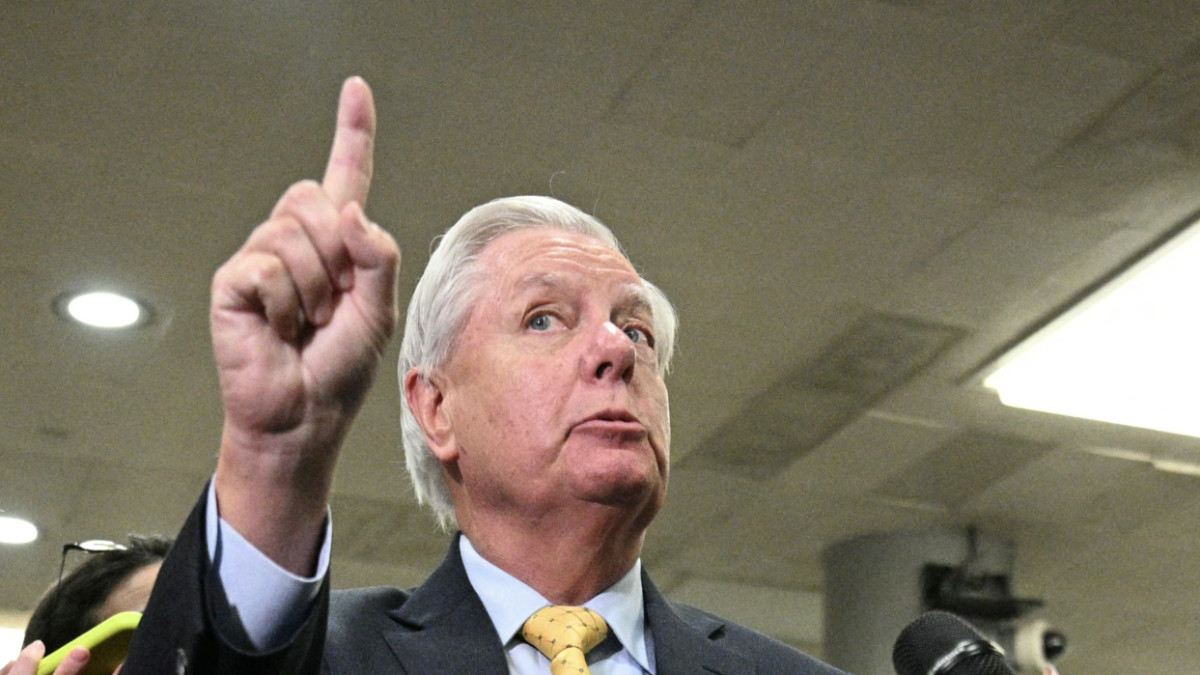
US Senator Lindsey Graham has issued a stark warning to Gulf allies, threatening ‘consequences’ for their refusal to participate in military operations against Iran. In a series of public statements, the senator criticized Saudi Arabia specifically for denying US forces access to its bases for offensive maneuvers and for its unwillingness to deploy its military against what he termed ‘the barbaric and terrorist Iranian regime.’
The confrontational rhetoric comes as the conflict between the US-Israeli coalition and Iran enters its second week, with Gulf states experiencing significant collateral damage. Despite being among the hardest hit by Iranian drone and missile attacks, regional powers including the UAE have explicitly stated they will not permit their territories to be used for offensive operations against Tehran.
Background context reveals that Graham’s recent diplomatic mission to Saudi Arabia was explicitly aimed at persuading Crown Prince Mohammed bin Salman to support military action—a fact the senator confirmed to The Wall Street Journal. This effort follows earlier revelations that Riyadh had prevented US access to its bases for offensive operations.
The Gulf Cooperation Council (GCC) states had previously lobbied President Trump against military escalation, fearing precisely the type of attacks that are now devastating their energy infrastructure and civilian facilities. Regional ambassadors have expressed frustration that their security concerns were disregarded in US planning, with the UAE’s UN representative Jamal al-Musharakh stating they are ‘being targeted in a very unwarranted manner’ despite their diplomatic efforts.
Military analysts note that Iran has demonstrated sophisticated strike capabilities, targeting critical infrastructure including water desalination plants and energy facilities across multiple Gulf nations. The conflict has already claimed the lives of seven American service personnel, with the latest casualty reported from injuries sustained in a March 1st attack on Prince Sultan Air Base.
The political landscape within Iran appears to be consolidating rather than fracturing under pressure, with the Assembly of Experts appointing Mojtaba Khamenei as the new supreme leader—a direct rejection of US demands for regime change. This development, coupled with the Gulf states’ reluctance to engage militarily, suggests the conflict may be entering a protracted phase with significant implications for US regional influence and security architecture.