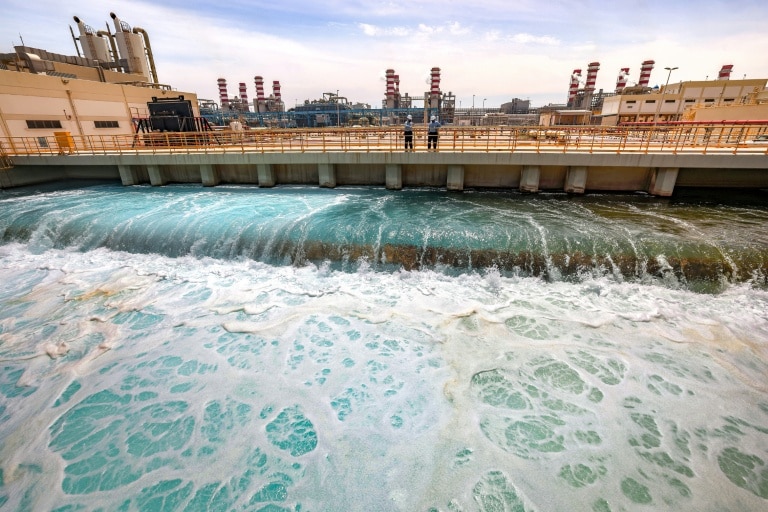
Water desalination facilities are becoming unprecedented military targets in Middle Eastern conflicts, marking a dangerous escalation in warfare tactics. Recent attacks have highlighted the vulnerability of these critical installations that provide drinking water to millions across the arid region.
Bahrain’s interior ministry reported Sunday that an Iranian drone strike damaged a water desalination plant, accusing Tehran of indiscriminately targeting civilian infrastructure. Iranian authorities countered by alleging the United States attacked a desalination facility on Qeshm Island serving 30 villages from a Bahrain-based installation.
These developments occur in a region where water scarcity presents extreme challenges. According to World Bank data, the Middle East experiences water availability approximately ten times lower than global averages. Desalination technology consequently becomes indispensable, with approximately 42% of global capacity located throughout the region.
National dependencies reveal staggering figures: desalinated water provides 42% of drinking water in the UAE, 70% in Saudi Arabia, 86% in Oman, and 90% in Kuwait. Experts warn that targeting these facilities could trigger catastrophic consequences. Water economist Esther Crauser-Delbourg cautioned that initial attacks on water infrastructure could unleash conflicts far exceeding current scales.
Historical precedents exist but remain limited. Houthi rebels have previously targeted Saudi desalination plants, while Saudi-led coalitions struck Yemeni water infrastructure. Israeli operations have affected water systems in Gaza, with similar incidents dating back to the 1991 Gulf War.
Security measures are intensifying in response to growing threats. Philippe Bourdeaux, Veolia’s regional director for Africa and the Middle East, confirmed enhanced security protocols including missile defense systems around major facilities. Operators are implementing contingency plans for power outages and seawater contamination scenarios, while maintaining water reserves sufficient for two to seven days of consumption.
The CIA warned as early as 2010 that disrupting Arab desalination facilities could yield more severe consequences than losing any other industry. A 2008 diplomatic cable suggested Riyadh might require evacuation within one week if critical desalination infrastructure suffered severe damage.