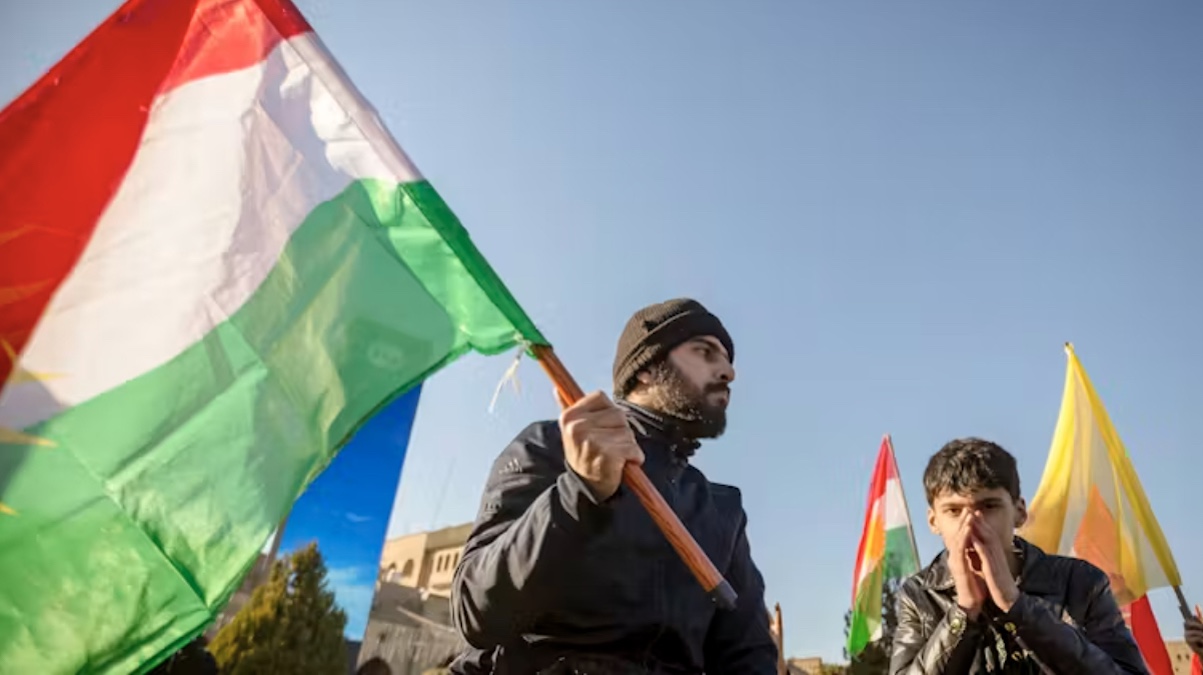
As sustained military operations by American and Israeli forces continue to weaken Iran’s clerical regime, Washington is reportedly considering a strategic partnership with Kurdish factions to escalate pressure on Tehran. This potential alignment targets Iran’s northwestern Kurdish minority, a demographic comprising 8-17% of the population that has endured systematic persecution under the Islamic Republic since its establishment in 1979.
Multiple intelligence reports indicate that following the outbreak of hostilities on February 28, 2026, the CIA has actively explored arming Kurdish opposition groups to foment internal uprising against Iranian leadership. This strategic consideration has been reinforced by high-level diplomatic engagements, including President Donald Trump’s direct communications with Iraqi Kurdish leaders Masoud Barzani and Bafel Talabani shortly after the initiation of bombing campaigns.
The geopolitical calculus appears influenced by Israel’s sustained advocacy for U.S.-Kurdish cooperation, leveraging existing intelligence networks among Kurdish populations across Iran, Iraq, and Syria. Kurdish grievances against Tehran’s authorities, intensified by recent events including the 2022 protests following Mahsa Amini’s death and decades of cultural suppression, create apparent conditions for productive collaboration.
However, Middle East analysts caution that this approach carries significant risks reminiscent of previous Western interventions. The Kurdish people, numbering 30-40 million across four nations, represent history’s largest stateless ethnic group despite early 20th century promises of sovereignty. Their political movements remain fragmented across ideological and national lines, complicating unified action.
Ethical considerations loom large, as Kurdish communities possess painful historical memories of abandonment by Western powers. The 1975 Algiers Accord, which terminated U.S. support for Iraqi Kurdish rebels without warning, resulted in devastating reprisals and mass displacements. Current Kurdish leadership expresses skepticism about American commitment beyond immediate tactical objectives.
Regional complications further complicate potential cooperation. Turkey, a NATO ally, considers Kurdish militant groups like the PKK and its Iranian affiliate PJAK as existential threats. Any substantial American arming of these elements would strain relations with Ankara, particularly following delicate ceasefire developments in 2025.
Military analysts question the practical effectiveness of Kurdish insurgent capabilities, noting assessments that indicate limited capacity for sustaining successful uprising against Iranian forces. The humanitarian implications also raise concerns, as historical patterns suggest Tehran would respond with indiscriminate repression against civilian populations in Kurdish regions.
The emerging strategy reflects concerning parallels with previous American interventions in Afghanistan and Syria, where short-term tactical advantages yielded long-term destabilizing consequences. Without clear political objectives and sustainable support structures, analysts warn that leveraging Kurdish aspirations against Iran may initiate another cycle of betrayal and regional instability.