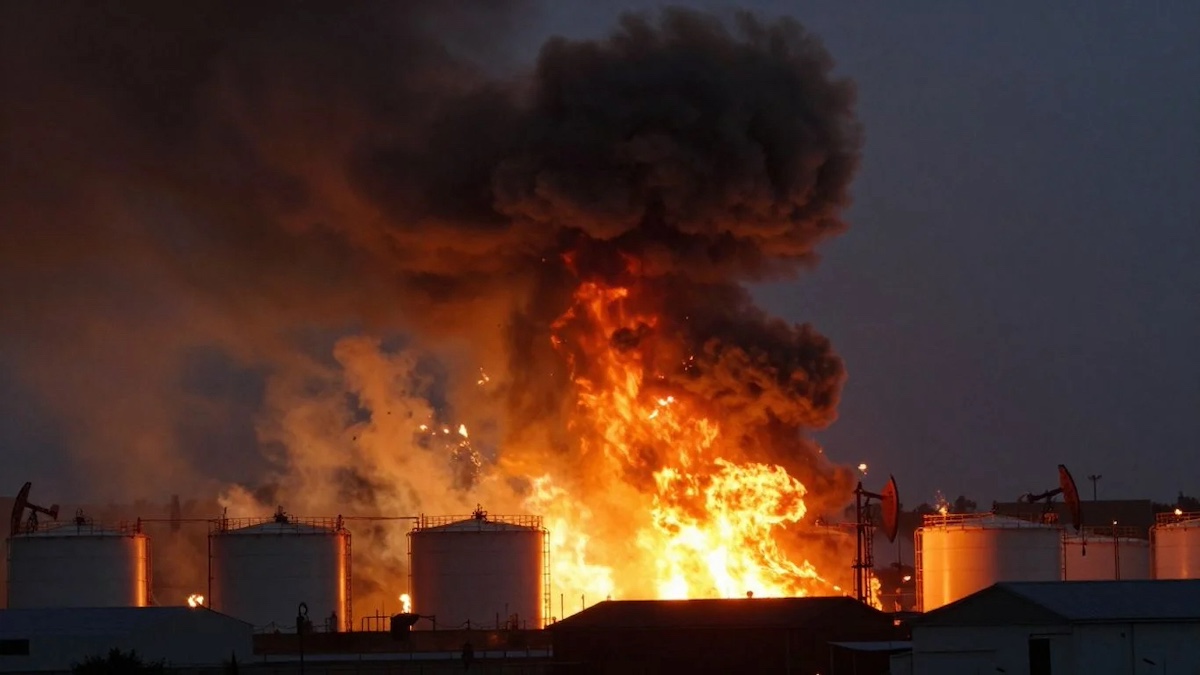
Tehran’s approximately 10 million residents confronted an environmental disaster Sunday morning following coordinated airstrikes by United States and Israeli forces targeting the Iranian capital’s oil storage facilities. The attack created a massive inferno that generated towering pillars of fire and spewed toxic smoke across the metropolitan area, blotting out sunlight and producing blackened precipitation that fell across the city.
The strategic bombardment exacerbates Tehran’s existing severe water shortage crisis, which had previously prompted President Masoud Pezeshkian to contemplate evacuation measures. Military analysts suggest the infrastructure targeting represents a calculated escalation designed to cripple civilian life and pressure Iran into unconditional surrender, as recently demanded by the Trump administration.
Additional strikes reported against police stations further degrade urban security infrastructure, potentially accelerating population flight from the capital. The systematic destruction of energy facilities and critical civilian infrastructure mirrors tactics employed by Russia in Ukraine, though the proximity of these targets to dense residential areas raises profound moral questions.
The humanitarian consequences are rapidly compounding Iran’s existing crises. Mass displacement could overwhelm national resources and security services, particularly if desperate citizens begin rioting in evacuation camps. Such scenarios might test the loyalty of Iran’s Revolutionary Guard Corps and allied militias if ordered to use lethal force against starving civilians rather than anti-government protesters.
CENTCOM has justified the strikes by alleging Iran uses populated areas for military operations, thereby voiding protected status under international law. This legal framing suggests potential further escalation toward systematic targeting of civilian areas if Iran maintains its refusal to surrender. The conflict has now unequivocally expanded beyond purely military targets to encompass semi-military infrastructure with devastating collateral impacts on civilian populations.