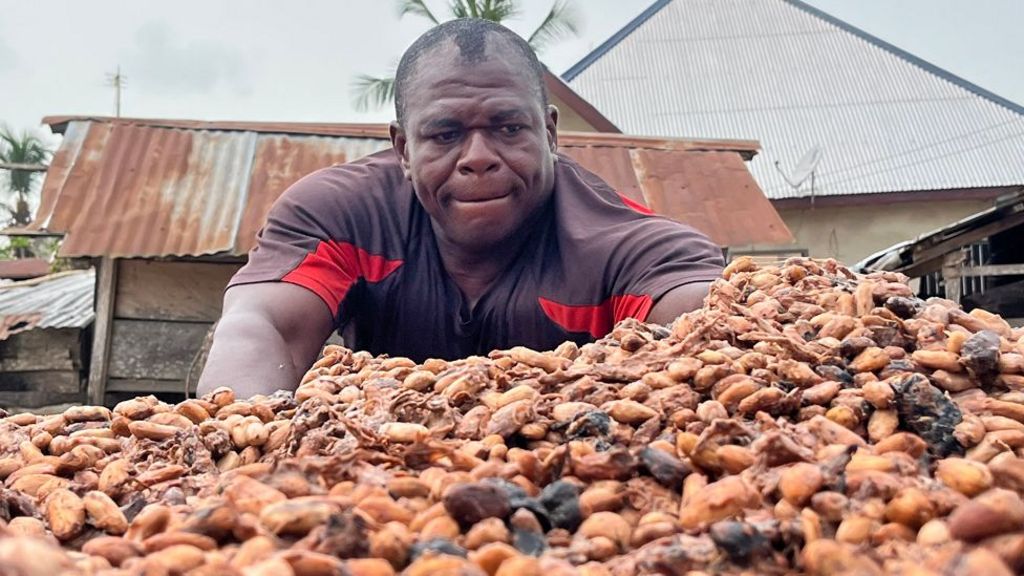
A profound crisis is unfolding across West Africa’s cocoa belt, where farmers who produce the world’s chocolate supply face financial devastation despite global chocolate price increases. The paradoxical situation has left hundreds of thousands of agricultural workers in Ghana and Ivory Coast without payment for months, creating widespread economic hardship in rural communities.
The core of the problem stems from a dramatic market reversal. Following record-high cocoa prices in 2024, global prices have since collapsed due to increased worldwide production coinciding with reduced demand. Chocolate manufacturers responded to previous price spikes by reducing bar sizes and cocoa content, ultimately decreasing their need for raw beans.
In both Ghana and Ivory Coast, state regulatory bodies set fixed annual prices for cocoa farmers. Ghana’s Cocoa Board (Cocobod) established a rate of $5,300 per tonne last October, while Ivory Coast’s Coffee and Cocoa Council implemented similar guaranteed pricing. These fixed rates now substantially exceed current global market prices by approximately 40%, creating an unsustainable economic gap.
The human impact has been severe. Akosua Frimpong, a 52-year-old Ghanaian widow, recounted how she couldn’t afford medical treatment for her husband before his death. ‘The money I was anticipating from my cocoa bean sales is currently inaccessible. I’m a widow now and I don’t have anyone to support me,’ she told BBC reporters.
Ghana’s Cocobod has accumulated approximately $3 billion in debt attempting to bridge the price gap, implementing executive pay cuts of 20% for management and 10% for senior staff. The board has now slashed guaranteed prices to around $3,500 per tonne, though this remains above market rates.
In Ivory Coast, warehouses in towns like Bangolo overflow with unsold cocoa sacks. Bahily Bakouli Issiaca, a cooperative member, reported trucks loaded with cocoa waiting unsold for nearly three weeks. The government recently announced plans to cut farmer payments by half to stimulate sales.
The crisis affects approximately 800,000 cocoa farmers directly, with ripple effects throughout rural economies. Farmers like Robert Addae, with 14 years of experience, note that production costs remain unchanged despite price reductions. ‘The prices of farm inputs and implements remain the same, the cost of labour has not reduced, so the cut in cocoa prices will adversely affect us,’ he explained.
With cocoa contributing 7% of Ghana’s GDP and 15% of foreign exchange earnings, the sector’s health directly impacts national economies. Both governments are implementing measures including increased domestic processing to capture more value from their cocoa industries.