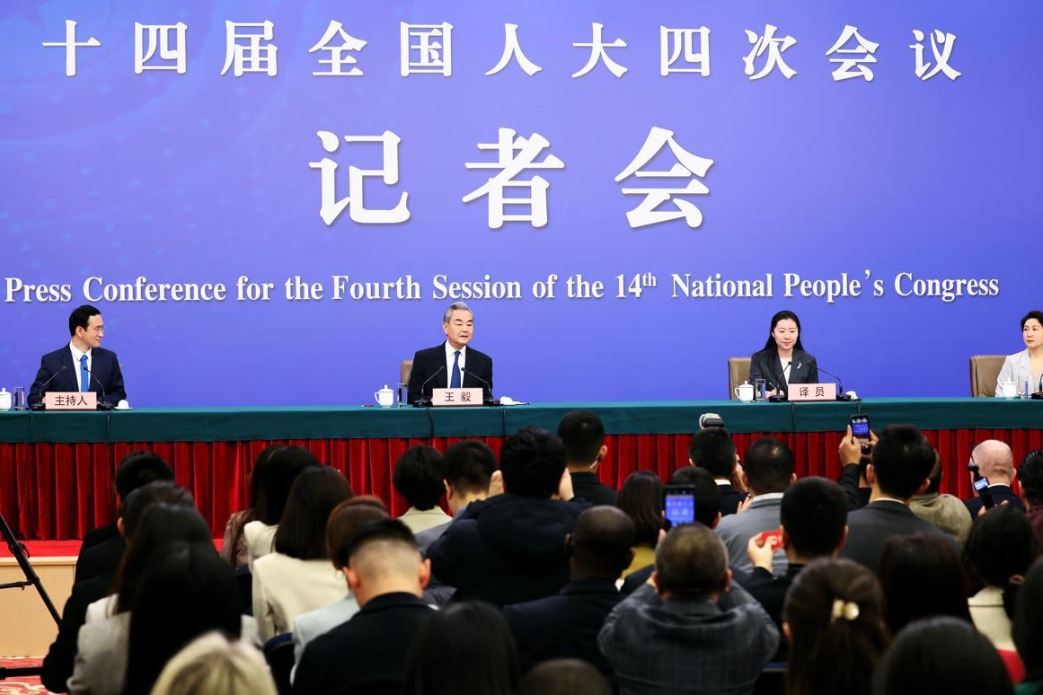
Chinese Foreign Minister Wang Yi has characterized 2026 as a pivotal year for Sino-American relations during his annual press conference held alongside China’s National People’s Congress sessions. The senior diplomat revealed that bilateral high-level exchanges between the two powers are already scheduled, emphasizing the necessity for both nations to engage with “sincerity and good faith” to advance their complex relationship.
Minister Wang stressed that while China maintains its consistent openness to cooperation, parallel commitment from the United States remains essential. “What the two sides need to do now is to create a suitable environment, manage the differences that do exist, and remove unnecessary disruptions,” he stated, outlining the practical steps required for relationship stabilization.
The Foreign Minister highlighted the crucial role of presidential diplomacy, noting that the continued positive interactions between President Xi Jinping and U.S. leadership have provided “important strategic safeguards” that have steadied the relationship following previous fluctuations. Wang expressed optimism that mutual sincerity could expand cooperation areas while reducing problematic issues, potentially making 2026 “a landmark year of sound, steady and sustainable development of China-US relations.”
Addressing broader global governance concepts, Minister Wang explicitly rejected the ‘G2′ framework that suggests Sino-American co-management of world affairs. “We should not forget there are more than 190 countries on our planet,” he remarked, advocating instead for a multipolar international system where “the future of humanity will be forged through the collective efforts of all nations.”
Wang cautioned against historical patterns of great-power rivalry and bloc confrontation, asserting that China “will never take the beaten path of seeking hegemony as its strength grows.” He called for major nations to demonstrate greater generosity and responsibility in observing international rules and upholding legal frameworks.
Academic experts provided additional context to these diplomatic statements. Chen Bo of the China Institute of International Studies interpreted Wang’s comments as demonstrating “Beijing’s proactive gesture in advancing ties with major countries.” Professor Jia Qingguo of Peking University emphasized the need for enhanced communication mechanisms to manage differences before escalation occurs.
Looking forward, Minister Wang previewed an active year for Chinese diplomacy, with President Xi scheduled to host numerous foreign leaders and undertake significant international visits. Major diplomatic events including the APEC Economic Leaders’ Meeting and the second China-Arab States Summit will further China’s foreign policy objectives of building “a community with a shared future for humanity.”