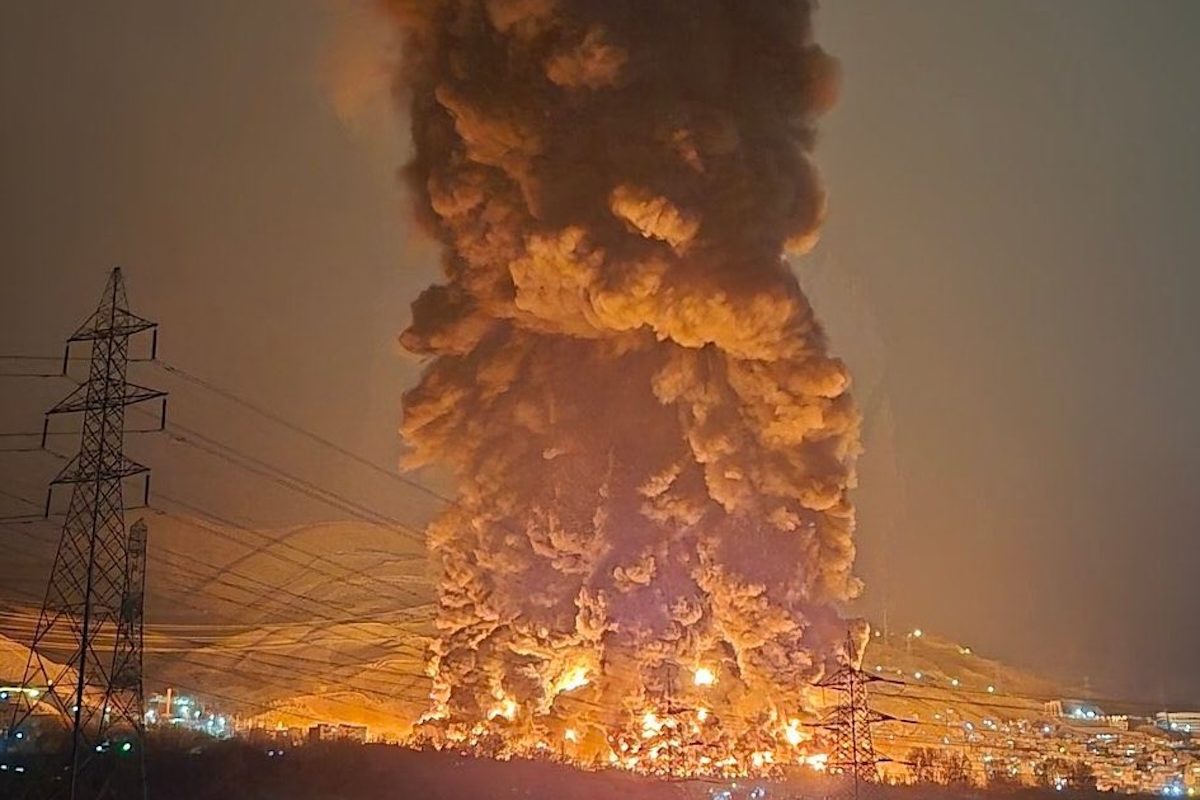
A joint US-Israeli military operation struck critical oil infrastructure in Tehran over the weekend, creating what witnesses described as apocalyptic scenes across Iran’s capital. The coordinated bombardment targeted multiple fuel storage depots in Tehran and Alborz provinces, triggering massive firestorms that sent toxic plumes of black smoke billowing into the night sky.
Residents awoke Sunday to an altered cityscape shrouded in ominous gray clouds, with reports of toxic black rain containing oil particles falling across metropolitan areas. Iranian emergency services worked desperately to contain the infernos while health officials warned citizens to remain indoors due to dangerously compromised air quality.
The Iranian Foreign Ministry characterized the assault as a deliberate escalation into “chemical warfare against Iranian citizens,” alleging the attacks released hazardous materials that would create long-term environmental and humanitarian consequences. Energy analysts immediately noted dramatic market repercussions, with crude futures experiencing their largest weekly gain since 1983—jumping 35% following the strikes.
International observers expressed grave concerns about the strategic targeting of civilian energy infrastructure. Iranian political commentator Kev Joon noted the unprecedented nature of the destruction: “These aren’t military targets. They’re the infrastructure of everyday life. This isn’t a liberatory war. It’s an attempt to break the backs of Iranian people.”
The economic implications extended beyond immediate oil price spikes. Qatar’s Energy Minister had previously warned The Financial Times that potential closure of the Strait of Hormuz could drive prices to $150 per barrel—a scenario that could “bring down the economies of the world.” Despite these concerns, US leadership indicated limited apprehension about rising fuel costs.
Environmental organizations and human rights advocates condemned the attacks as potential war crimes, citing the deliberate targeting of essential civilian infrastructure and the resulting ecological disaster. The Iranian Red Crescent Society issued specific exposure guidelines, warning that the toxic rainfall could be “highly dangerous and acidic” for Tehran’s approximately 10 million residents.