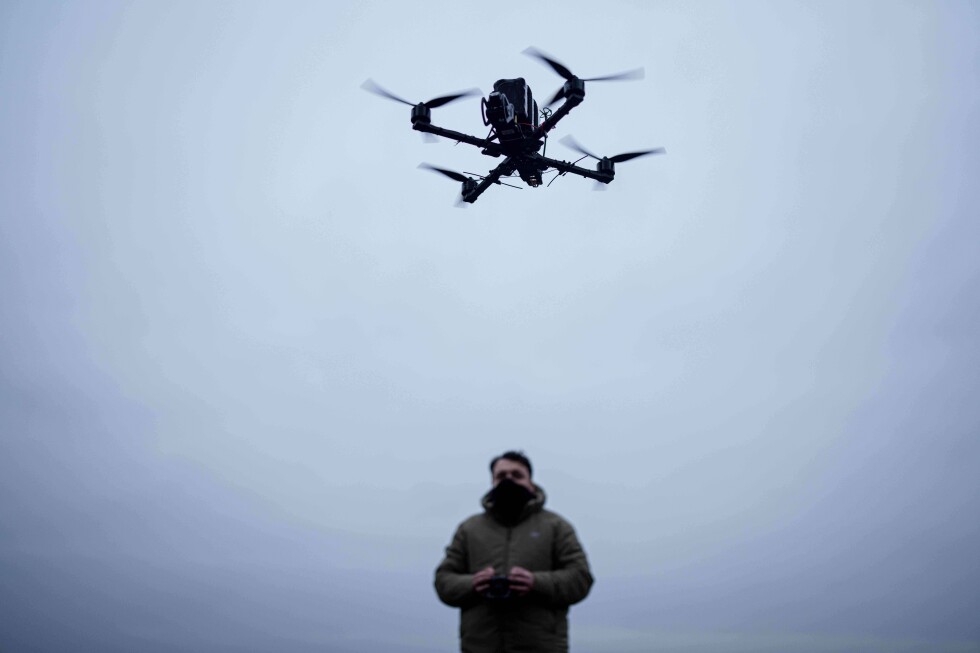
KYIV, Ukraine — As Middle Eastern conflicts deplete U.S. missile inventories, Ukraine is strategically positioning its battlefield innovation—cost-effective interceptor drones—as diplomatic currency in global defense negotiations. Having evolved into a world leader in interceptor production since Russia’s full-scale invasion began four years ago, Ukraine now offers its combat-tested expertise to the United States and Gulf partners while seeking advanced weaponry it cannot domestically manufacture.
Ukraine’s defense sector, initially underdeveloped at the war’s onset, has undergone rapid transformation through necessity-driven innovation. The industry now specializes in countering Iranian-designed Shahed drones, which Russia launches by the hundreds, with interceptors costing merely $1,000-$2,000 compared to million-dollar Patriot missiles. This technological advancement has attracted significant international interest, particularly after the U.S. recently requested ‘specific support’ against Shahed drones in the Middle East, prompting President Zelenskyy to deploy Ukrainian equipment and experts—though operational details remain classified.
The emerging opportunity comes as Gulf nations exhaust their Patriot missile stocks against inexpensive Iranian drones, creating what defense experts call an unsustainable cost imbalance. Lockheed Martin produced a record 600 PAC-3 MSE interceptors throughout 2025, yet Zelenskyy revealed that Middle Eastern nations expended over 800 such missiles in just three days—more than Ukraine’s entire reserve throughout its four-year conflict.
Ukrainian manufacturers report receiving repeated requests from the U.S. and Gulf states including UAE, Bahrain, Saudi Arabia, and Qatar for their domestically produced interceptors. Companies like General Cherry, creator of the ‘Bullet’ interceptor that has downed hundreds of Shaheds, and Skyfall, producer of the 3D-printed P1-Sun capable of reaching 300 km/h, assert they can manufacture tens of thousands of units monthly without compromising Ukraine’s defenses.
However, analysts caution that global arms trading involves complex diplomatic considerations beyond technical capability. Yevhen Mahda of Kyiv’s Institute of World Policy notes that weapon trading is ‘an incredibly subtle and sensitive issue’ dominated by the U.S., requiring more than compelling narratives to access international markets.
Ukraine’s most valuable export may be its human expertise. While hardware exports remain legally complicated under wartime restrictions, Zelenskyy has repeatedly offered to send instructors abroad—a significant strategic sacrifice given Ukraine’s own personnel shortages. Effective interceptor systems require integration with radar networks and trained operators, with Oleh Katkov of Defense Express emphasizing that ‘the real, proven expertise—not just on paper—exists only in Ukraine.’
The proposed arms exchange represents a potential geopolitical realignment, where Ukraine could emerge as a new player in modern warfare if it can navigate diplomatic challenges and scale production while maintaining its defensive capabilities.