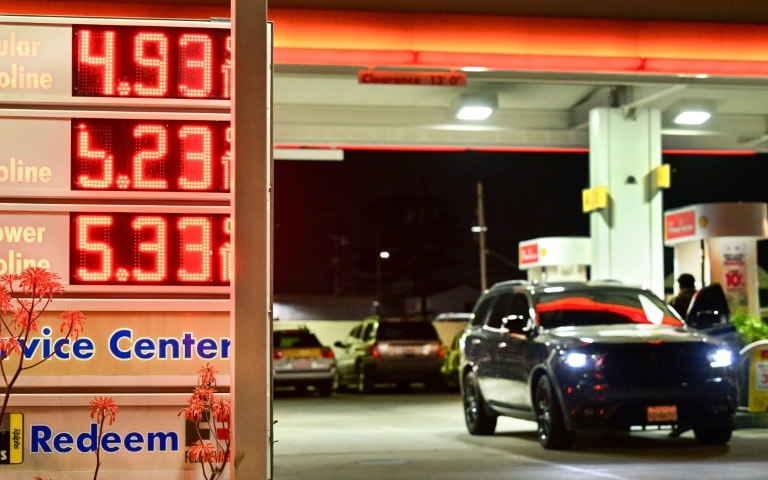
American consumers are confronting a sharp increase in fuel costs as geopolitical tensions in the Middle East trigger a chain reaction affecting household budgets nationwide. The recent U.S.-Israel military action against Iran has provoked Tehran to effectively blockade the Strait of Hormuz, causing global oil prices to spike dramatically. This development has translated into an 11% surge in average U.S. gasoline prices within just one week, according to the latest data from the American Automobile Association.
In Washington D.C., educator Sean Robinson expressed shock upon encountering the $3.27 per gallon price at his local station. “This significant jump will force me to reconsider my daily routines,” Robinson noted, indicating he would limit non-essential travel and entertainment expenses. This sentiment echoes across income brackets, with finance professional Toloria Washington describing the situation as pushing households into “survival mode” as families reassess spending priorities.
The timing presents considerable political challenges for the Trump administration with midterm elections approaching. President Trump, who previously celebrated declining energy costs during his tenure, now faces voters grappling with renewed inflationary pressures. The Republican Party’s narrow congressional majority appears increasingly vulnerable as economic concerns mount.
Economists warn that sustained energy price increases could compel the Federal Reserve to maintain elevated interest rates, potentially slowing economic growth. KPMG chief economist Diane Swonk characterized the situation as a “dueling mandate” for the central bank, balancing inflation control against employment objectives. While Fed Governor Christopher Waller suggested energy price impacts might be transient, many Americans already feel besieged by consecutive economic shocks.
As November elections approach, analysts suggest voter frustration over diminishing purchasing power and shrinking middle-class stability could significantly influence political outcomes. The convergence of geopolitical conflict, economic pressure, and electoral politics creates a volatile landscape for both policymakers and citizens alike.