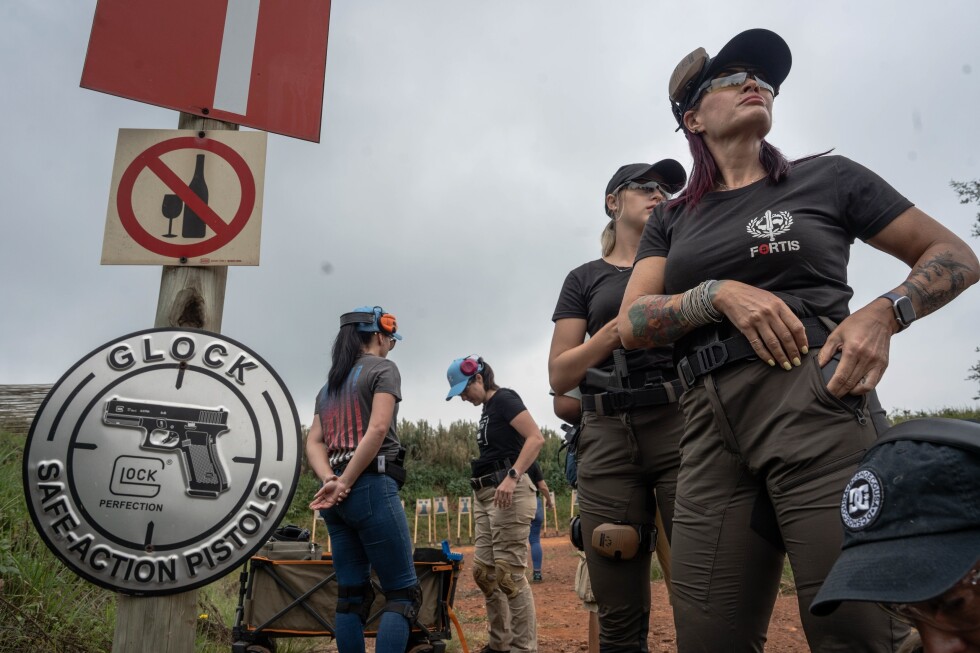
In the agricultural town of Bronkhorstspruit, just outside Pretoria, a diverse group of South African women ranging from teenagers to senior citizens are learning firearm proficiency under female instruction. These training sessions at the Lone Operator shooting range represent a growing national movement as women seek protection against gender-based violence that reached such epidemic proportions that the government declared it a national disaster last November.
Participants as young as 13 and as old as 65 practice with 9mm pistols, receiving guidance on proper grip and sight alignment from lead instructor Claire van der Westhuizen. The curriculum extends beyond basic marksmanship to include realistic scenarios such as firing from defensive positions on their stomachs and backs.
This trend emerges against a harrowing statistical backdrop: United Nations data reveals South Africa’s femicide rates rank among the world’s highest, exceeding global averages by five to six times. A 2022 national study found over 35% of women aged 18 and older have experienced physical or sexual violence, predominantly from intimate partners. According to women’s rights organization Sonke Gender Justice, approximately 15 women are killed daily in gender-based attacks.
The crisis has prompted varied responses across the nation. In Johannesburg, women are turning to martial arts like jiujitsu, learning practical techniques to escape chokeholds and break free from wall pinning. Many participants keep their training secret from partners, sometimes claiming shopping trips as cover.
While President Cyril Ramaphosa’s disaster declaration enables redirected funding, activists point to a persistent implementation gap despite progressive policies. They cite socioeconomic inequality, patriarchal attitudes, and underresourced law enforcement as contributing factors, with rape conviction rates languishing at just 8% in 2021.
For survivors like Sunette du Toit, a 51-year-old grandmother who endured a home invasion by five assailants, firearms training represents reclaimed agency. ‘I had to do this for myself to gain my confidence back,’ she explained, describing the community as ‘a family of support.’
Yet women’s rights advocates caution that placing the burden of protection on potential victims rather than addressing perpetrators remains problematic. While self-defense training builds confidence, instructors acknowledge its limitations, emphasizing heightened awareness rather than guaranteed safety.