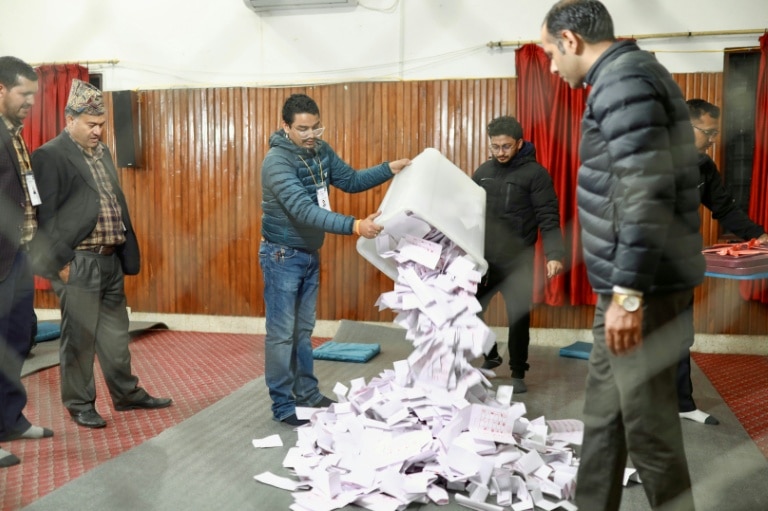
Early electoral returns from Nepal’s parliamentary elections indicate a potential political earthquake as Balendra Shah’s centrist Rastriya Swatantra Party (RSP) surges toward a supermajority victory. With counting operations continuing across the Himalayan nation, preliminary data from Nepal’s Election Commission reveals Shah’s party leading in 99 of 165 direct election constituencies while securing over half of proportional representation votes tallied thus far.
The 35-year-old musician-turned-politician has achieved a remarkable political ascent, currently outpacing veteran Marxist leader KP Sharma Oli in his own constituency. This electoral contest symbolizes a generational clash between Nepal’s political establishment and youth-driven demands for systemic change. The high-stakes November election followed deadly anti-corruption protests six months earlier that resulted in 77 fatalities and toppled the previous government.
Election Commission spokesperson Narayan Prasad Bhattarai confirmed that while only 24 seats had been formally declared by Saturday morning—with RSP capturing 18—the emerging pattern suggests a potential two-thirds majority in the 275-member House of Representatives. The proportional representation counting process, determining 110 additional seats, may require approximately one week for completion according to commission estimates.
Despite enthusiastic celebrations by RSP supporters in Kathmandu streets, party leadership has urged restraint pending final results. Deputy Chairman DP Aryal emphasized via social media that while electoral trends appear favorable, official celebration should await conclusive outcomes. The electoral process continues unimpeded from high-altitude mountain regions to southern plains bordering India, with full direct election results anticipated by Monday.