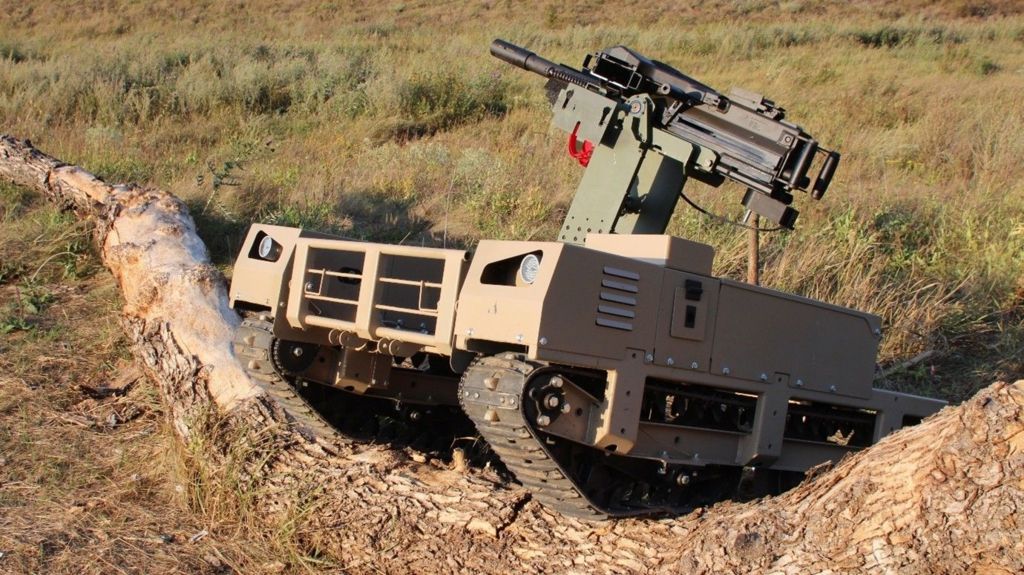
The battlefields of Ukraine have transformed into a proving ground for robotic warfare, with armed uncrewed ground vehicles (UGVs) emerging as pivotal assets in the conflict. What began as Russia’s full-scale invasion has rapidly evolved into a high-tech confrontation where autonomous systems are reshaping military strategies and tactics.
Ukrainian forces have pioneered the world’s first dedicated UGV battalion, demonstrating remarkable success in combat operations. These robotic systems have reportedly repelled Russian assaults, captured enemy soldiers, and even engaged in direct robot-versus-robot confrontations without human presence on the battlefield. Major Oleksandr Afanasiev of Ukraine’s K2 brigade confirms that ‘robot wars are already happening,’ highlighting the unprecedented nature of this technological shift.
The current generation of UGVs primarily operates with human oversight, mounting weaponry ranging from Kalashnikov machine guns to grenade launchers. Ukrainian units deploy both armed strike vehicles and specialized kamikaze UGVs—silent, battery-powered platforms laden with explosives that can approach enemy positions undetected. Despite their advanced capabilities, ethical considerations and international humanitarian law maintain human operators in the decision-making loop for lethal engagements.
Beyond offensive operations, UGVs continue to serve critical support functions including supply delivery, medical evacuation, and engineering tasks such as mine-laying and barbed wire deployment. This versatility addresses Ukraine’s severe manpower shortages while minimizing soldier exposure to increasingly dangerous combat environments where aerial drones have expanded kill zones to 20-25 kilometers.
The future trajectory points toward exponential growth in autonomous warfare. Former Ukrainian Commander-in-Chief Valerii Zaluzhnyi envisions AI-powered swarms of coordinated drones operating across air, ground, and sea domains simultaneously. Ukrainian manufacturers are responding to this vision, with companies like Devdroid and Tencore scaling production to meet anticipated demand for tens of thousands of units in coming years.
Russian forces are developing comparable systems including the Kuryer combat UGV and Lyagushka kamikaze vehicles, setting the stage for increased autonomous confrontations. As Yuriy Poritsky of Devdroid notes, direct clashes between opposing robotic systems are inevitable given their expanding deployment and capabilities.
The rapid innovation driven by battlefield necessity is accelerating the transition from science fiction to military reality, with developers already working on enhanced autonomy features including mission execution and automated return protocols. This technological evolution suggests that humanoid combat robots may eventually become standard battlefield assets, fundamentally transforming the nature of armed conflict.