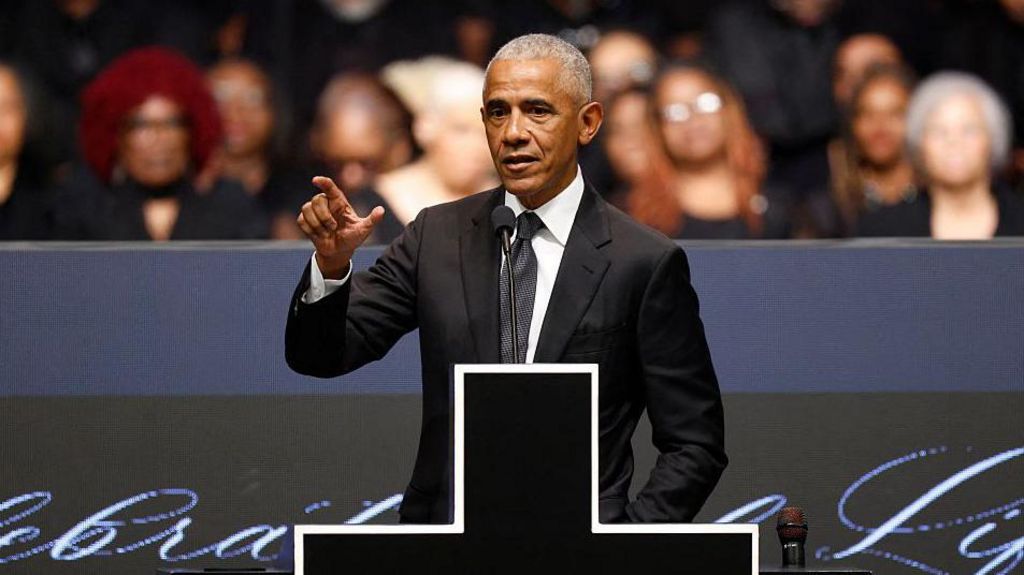
Chicago witnessed a historic convergence of political power and cultural influence as the nation bid farewell to Reverend Jesse Jackson, the tenacious civil rights leader who passed away last month. The memorial service transformed into both a celebration of Jackson’s monumental legacy and an implicit commentary on contemporary political tensions.
Three former U.S. presidents—Joe Biden, Barack Obama, and Bill Clinton—joined Vice President Kamala Harris in delivering heartfelt tributes that underscored Jackson’s enduring impact on American democracy. Obama’s eulogy took on particular significance as he addressed current challenges to democratic institutions without directly naming former President Donald Trump, stating, ‘Each day we wake up to some new assault on our democratic institutions.’
Harris received a standing ovation for her remarks, which similarly contained pointed observations about the current political landscape. ‘I predicted a lot of what is happening right now,’ she noted, adding that navigating these times without Jackson’s guidance presented particular challenges.
The service highlighted Jackson’s multifaceted legacy: his work alongside Martin Luther King Jr., his groundbreaking presidential campaigns that broke barriers for Black politicians, and his founding of the Rainbow PUSH coalition that continues advocacy work for social justice. Bill Clinton shared personal recollections of Jackson’s support during his impeachment proceedings, illustrating the reverend’s commitment to standing by allies during difficult times.
Cultural tributes featured performances by Jennifer Hudson and Opal Staples, while prominent figures from entertainment (filmmaker Tyler Perry) and sports (NBA legend Isiah Thomas) joined thousands of Chicago residents in honoring the activist. Reverend Al Sharpton, Jackson’s longtime colleague in the civil rights movement, also delivered remarks celebrating his friend’s uncompromising commitment to justice.
The celebration emphasized Jackson’s characteristic impatience with injustice—a quality Harris highlighted when noting that Jackson ‘did not waste time waiting, even when the doors in front of him were barred and bolted.’ This public memorial precedes a private family service scheduled for the weekend, marking the final chapter in commemorating a figure who shaped decades of American civil rights advancement.