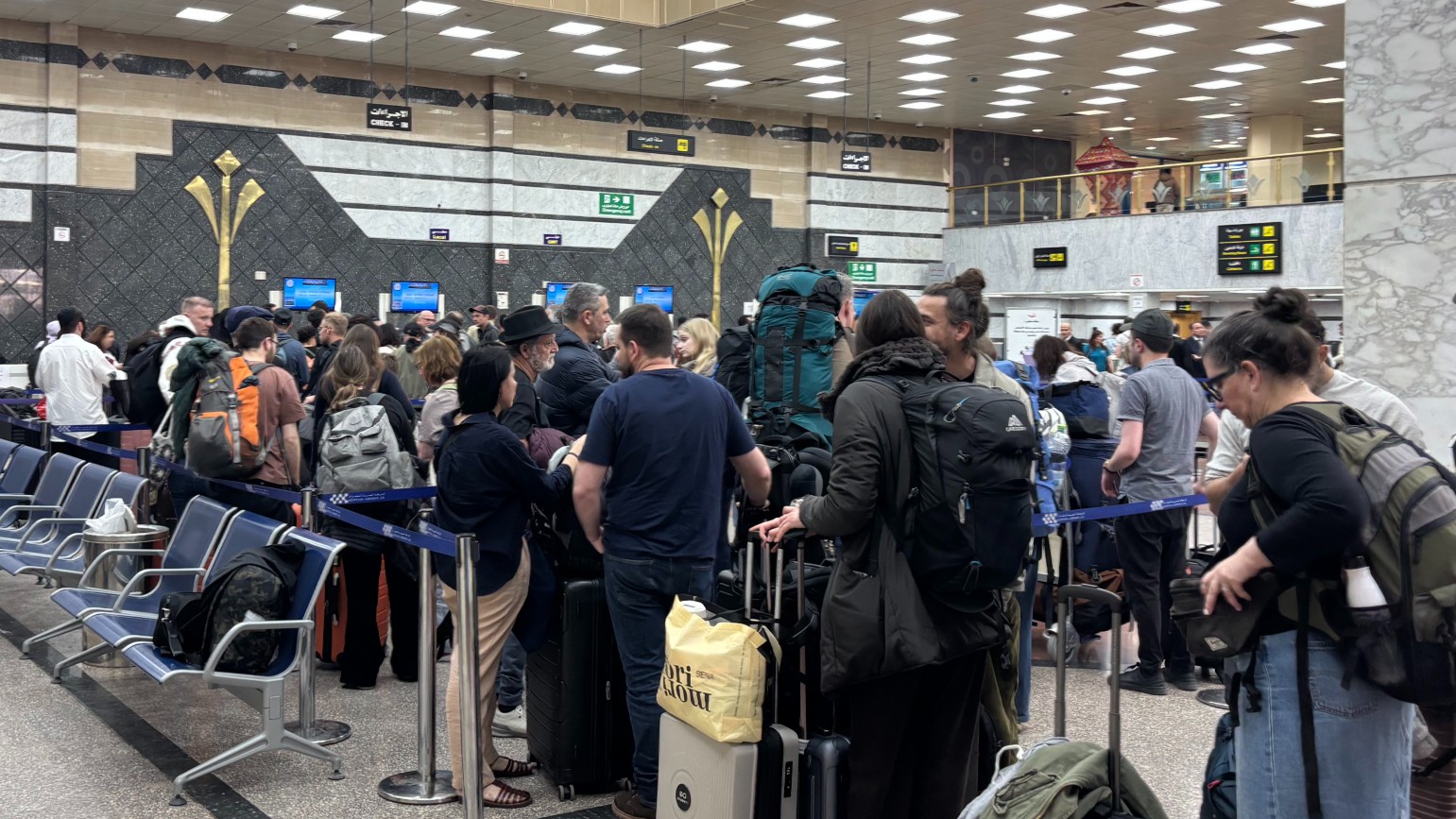
The tranquil Red Sea resort of Taba, situated at the Egypt-Israel border, has undergone a dramatic transformation into a bustling international transit corridor. This shift follows Israel’s complete airspace closure, implemented in response to its escalating military conflict with Iran that commenced with joint US-Israeli strikes on February 28th.
The strategically positioned Taba border crossing now witnesses continuous bidirectional movement, with thousands traversing daily. Evacuating foreign nationals and Israelis stream into Egypt to access international flights, while returning citizens and incoming travelers cross into Israel via coordinated bus services. This unprecedented flow has activated the previously underutilized Taba International Airport, which reopened within 48 hours of initial hostilities to accommodate surging demand.
Israeli airlines Arkia and Israir initiated special flight operations to Athens and six European destinations respectively, joined by Cypriot and Greek carriers. These operations form part of ‘Operation Lion’s Wings,’ Israel’s emergency repatriation program. Notably, flag carrier El Al abstained from Taba operations citing unresolved security apprehensions.
US Ambassador to Israel Mike Huckabee publicly endorsed the route through social media, directing citizens to tourism ministry-organized buses from major cities to the crossing. Israel’s National Security Council issued specific guidance for transit through Sinai, advising discretion and immediate airport transfer after border processing.
Travelers report efficient border procedures with consular officials from multiple nations providing assistance. However, the 40-kilometer desert highway journey between border and airport requires independent arrangement, with arriving passengers receiving immediate hydration and snacks before prearranged coach transfers.
The sudden tourism surge has generated economic opportunities, drawing workers from across Egypt seeking employment in transportation and hospitality. Hotel occupancy in Taba has reached unprecedented levels after years of tourism decline, with rates increasing substantially due to demand.
Airport personnel confirm consistently fully booked flights, estimating up to 15 daily departures. While approximately 60% of travelers are foreign nationals according to eyewitness accounts, the route also facilitates Israeli departures for those fearing intensified violence.
The situation evokes memories of similar border activity during the previous summer’s 12-day conflict, though current operations concentrate on Taba’s airport rather than Sharm El Sheikh’s facility. This vibrant transit activity presents stark contrast to the tightly restricted humanitarian situation at Gaza’s Rafah crossing, merely 200 kilometers distant, highlighting the region’s complex geopolitical realities.