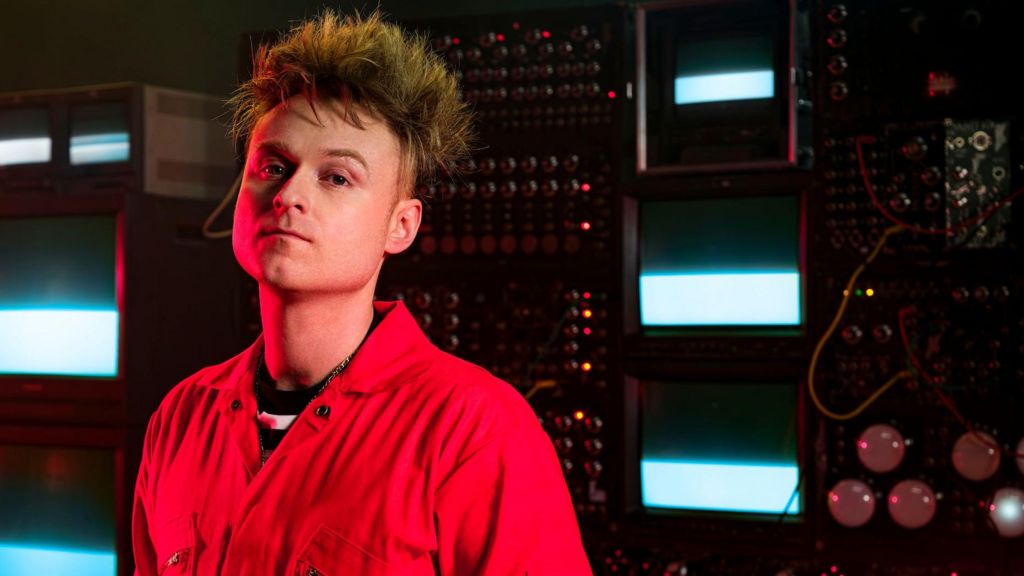
In a bold departure from convention, the United Kingdom has selected experimental electronic musician Sam Battle, known professionally as Look Mum No Computer, as its representative for the upcoming Eurovision Song Contest in Vienna. The BBC’s choice marks a significant shift in strategy following two consecutive years of dismal public voting results.
Battle’s entry, titled “Eins, Zwei, Drei,” deliberately subverts the polished pop formula that has characterized recent UK entries. The track features chanted hooks, crunchy keyboard textures, and a chorus partially sung in German—an unusual choice that incorporates more German language than Germany’s own entirely English-language entry. Lyrically, the song whimsically references traditional English desserts like “roly poly with custard” while chronicling the musician’s daydream of escaping office drudgery for a European holiday.
“I was genuinely surprised they chose this,” Battle admitted. “The BBC typically favors conventional approaches, and this is anything but conventional. They’re taking a risk—but who knows?”
The selection comes after disappointing finishes for recent UK entrants Olly Alexander (2024) and Remember Monday (2025), both of whom received zero points from public voters, narrowly avoiding last place only through professional jury scores.
Battle brings a distinctive background to the competition. Beyond his musical career as former frontman of indie band Zibra, he maintains a YouTube channel dedicated to building unconventional synthesizers from toys like Furbies and Game Boys. He holds the Guinness World Record for creating the largest “drone synth,” capable of producing 1,000 separate tones, and operates a museum in Kent showcasing experimental and obsolete musical instruments.
His stage name, Look Mum No Computer, reflects his preference for creating music with self-built instruments rather than computer software. “Eins, Zwei, Drei” was composed on one such custom synthesizer—a towering black apparatus nicknamed “Kosmo” that resembles a cross between a telephone exchange and an aircraft cockpit.
The song originated unexpectedly when Battle emailed the BBC’s Eurovision team unsolicited last September. While initially expecting to write for another performer, he was invited to consider representing the UK himself. The concept emerged during equipment setup when he casually counted “Eins, Zwei, Drei” while moving furniture with colleagues, sparking the creative concept.
Battle’s performance will be choreographed by Fredrik Rydman (known as “Benke”), who previously worked with 2024 Eurovision winner Nemo. The musician approaches the competition philosophically: “Whether winning or not, I’ll try my hardest. There’s considerable favoritism in voting, and the UK isn’t necessarily everyone’s favorite. I’ll just be myself and hope they see I’m an alright guy.”
Amid a challenging Eurovision buildup that has seen five countries withdraw due to political controversies, Battle hopes his song’s message of European unity will resonate. “The essence of Eurovision is togetherness,” he noted, “and that’s what I wanted to portray.”