A groundbreaking advancement in digital human technology has emerged from China, where scientists have constructed the industry’s largest high-precision 3D facial database. This development marks a significant leap toward creating exceptionally realistic virtual humans capable of natural emotional expression and identity recognition.
The research collaboration between Shenzhen Institutes of Advanced Technology (Chinese Academy of Sciences) and Fujian University of Technology addressed a critical bottleneck in 3D facial landmark detection—the scarcity of large-scale, precisely annotated datasets. Previous methods predominantly relied on 2D texture assistance or synthetic 3D faces, resulting in limited generalization capabilities.
At the core of this breakthrough is a novel curvature-fused graph attention network (CF-GAT) architecture that can directly predict facial landmarks from raw point clouds. This innovative approach facilitates a fundamental shift from generic ‘one-size-fits-all’ modeling to truly personalized facial reconstruction.
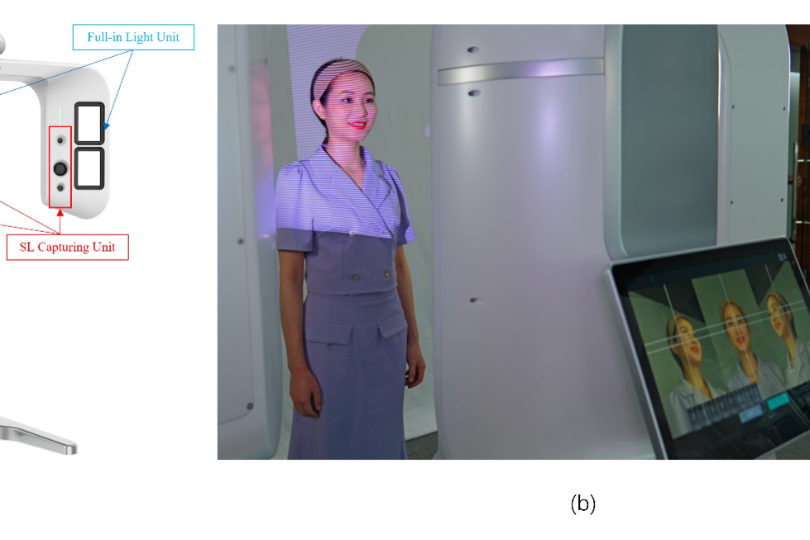
The research team established a customized 3D/4D facial acquisition system to collect standardized data, ultimately compiling approximately 200,000 high-fidelity 3D facial scans. The comprehensive database system encompasses multiple specialized datasets including multi-expression 3D faces, standardized 3D facial landmarks, high-precision 3D human bodies, and dynamic 4D facial expressions.
According to corresponding author Song Zhan, these databases now form the foundational infrastructure for humanoid robot development, enabling high-fidelity perception, expression modeling, and behavior generation. The technology promises to revolutionize human-computer interaction by creating more natural and intelligent interfaces.
The study, recently published in IEEE Transactions on Circuits and Systems for Video Technology, anticipates applications extending beyond digital humans to data-driven large-model humanoid robot systems, potentially transforming how humans interact with artificial entities across various sectors.