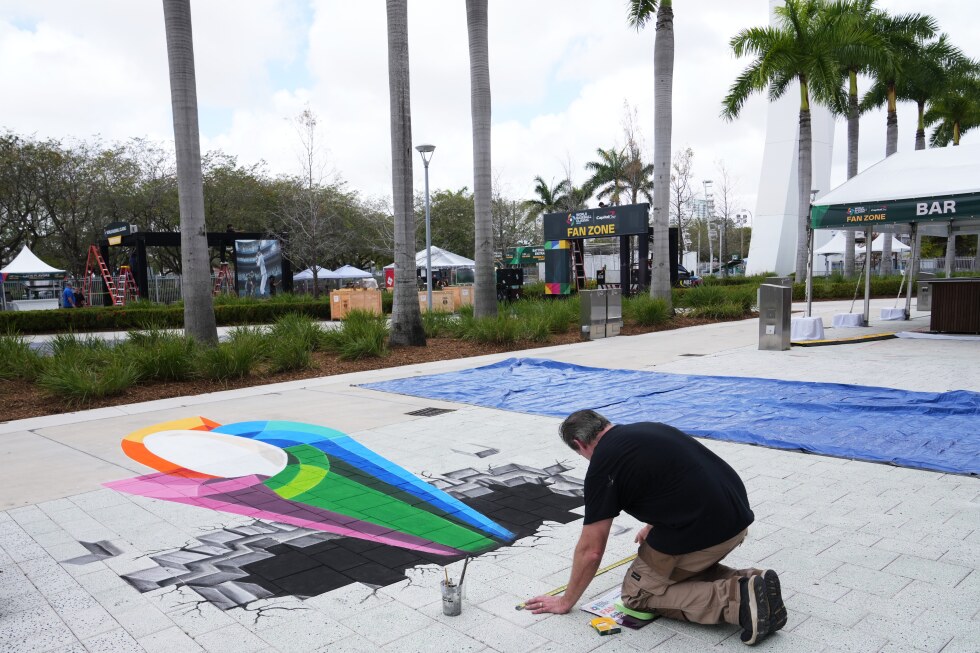
MIAMI — As the World Baseball Classic expands beyond Tokyo to multiple global venues including Miami, the tournament has evolved into an unexpected platform where international sports and geopolitics intersect. The Venezuelan national team, managed by Omar López, finds itself at the center of this convergence amid heightened political tensions following the U.S. military operation that captured deposed Venezuelan leader Nicolás Maduro in January.
López, whose cap displays both Venezuelan and American symbolism, maintains a firm separation between athletics and politics. “I’ve dedicated 28 years to baseball and avoid political discussions,” he stated during Thursday’s press conference. “Our sole focus remains on representing Venezuela through competitive excellence.”
The Miami-Fort Lauderdale metropolitan area, home to approximately 200,000 Venezuelan expatriates according to U.S. Census estimates, anticipates massive turnout for Venezuela’s four scheduled games at loanDepot Park. Ticket availability and secondary market pricing indicate exceptionally high demand, particularly within the Venezuelan community concentrated in Miami’s Doral suburb—coincidentally the location of former President Trump’s golf resort slated to host the G20 Summit.
This geopolitical backdrop extends beyond Venezuelan-American relations. The tournament commences shortly after joint U.S.-Israel military strikes against Iran, with Israel coincidentally assigned to Miami’s pool games. Cuba, another longstanding U.S. adversary, could potentially advance to Miami rounds despite opening in San Juan. These developments occur alongside intensified immigration enforcement measures that have raised concerns among international visitors.
Despite these tensions, players emphasize baseball’s unifying potential. Miami Marlins utility player Javier Sanoja expressed emotional connection to the host city: “Miami represents the closest approximation to our homeland. Witnessing Venezuelan pride fill this stadium overwhelms me with national pride.”
Team captain Salvador Pérez echoed this sentiment: “Spectators purchase tickets anticipating victory, not political statements. We concentrate on controllable elements—our performance on the field—while entrusting broader circumstances to divine providence.”
No protests were observed during Thursday’s training sessions, though the potential for politically charged demonstrations remains uncertain as competition intensifies throughout the tournament week.