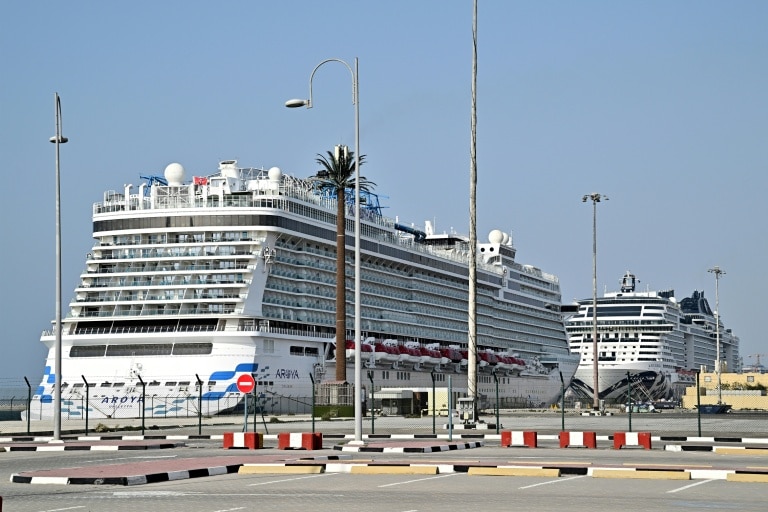
The escalating Middle Eastern conflict has created an unprecedented humanitarian and logistical crisis in the Gulf region, leaving approximately 35,000 individuals stranded aboard vessels. According to the UN’s International Maritime Organization (IMO), this includes 20,000 professional seafarers and 15,000 cruise ship passengers whose mobility has been severely restricted.
The maritime industry has officially escalated the threat level, redesignating the Strait of Hormuz, Gulf of Oman, and the broader Gulf as a ‘Warlike Operations Area.’ This critical classification grants maritime workers enhanced protections and reflects the severe deterioration of security in one of the world’s most vital energy transit corridors. Since the outbreak of hostilities, the IMO has documented seven separate maritime incidents, resulting in two fatalities and seven injuries.
IMO Secretary General Arsenio Dominguez condemned the violence, stating, ‘Beyond the economic impact of these alarming attacks, it is a humanitarian issue. No attack on innocent seafarers is ever justified.’ He urged all shipping companies to exercise extreme caution while operating in the affected waters.
The strategic Strait of Hormuz, a chokepoint for approximately one-fifth of global crude oil and significant liquefied natural gas supplies, has been effectively shut down by Iranian Revolutionary Guards, who claim ‘complete control.’ This blockade has triggered a massive operational halt, with shipping behemoths like Maersk suspending all new bookings. Energy intelligence firm Kpler reported a staggering 90% decline in oil tanker transits compared to the previous week.
The economic repercussions are immediate and severe. Global oil prices surged dramatically, with West Texas Intermediate crude jumping over 5% to $78.88 per barrel—its highest point since last January. The international benchmark, Brent North Sea crude, also rose sharply by 3.6% to $84.34 per barrel.
In a joint statement, the International Transport Workers’ Federation (ITF) and maritime employer representatives highlighted the scale of the disruption, noting that ‘hundreds of vessels are stranded.’ ITF General Secretary Stephen Cotton described the situation as the most severe he has witnessed in 32 years, citing profound diplomatic uncertainty. He clarified the grim reality for crews, explaining that even with the right to request repatriation, logistical constraints and minimum safe manning requirements make immediate evacuation impossible.
This region now joins other globally recognized high-threat maritime zones, including parts of the Sea of Azov, the northern Black Sea, and the Gulf of Aden, all classified as Warlike Operations Areas.