The recent U.S.-Israeli assassination of Iran’s Supreme Leader Ayatollah Ali Khamenei has triggered unexpected political tremors in Bahrain, a key Western ally in the Gulf region. While Washington and Tel Aviv anticipated potential regime change in Tehran, the immediate consequences have manifested differently in the island kingdom, where rare public demonstrations have erupted despite severe restrictions on dissent.
Bahrain witnessed widespread protests following confirmation of Khamenei’s killing, with crowds marching through narrow streets chanting Shia religious slogans such as “for the sake of Hussein.” The demonstrations, described by local sources as initially peaceful, represent a significant development in a country where public opposition is routinely suppressed. The response from Bahraini security forces was characteristically aggressive, employing teargas directly against protesters and making numerous arrests.
According to the Bahrain Institute for Rights and Democracy (BIRD), at least 65 individuals were detained in connection with the protests. Among those arrested were Husain Naji Fateel and Ali Mahdi, young men who had peacefully marched toward the U.S. embassy while documenting their actions online. They now face severe charges including inciting hatred against the monarchy, assisting an enemy state, undermining public security, and misuse of social media.
The political context of these developments is deeply rooted in Bahrain’s complex demographic and historical landscape. The majority Shia population, predominantly from the Baharna ethnic group that adopted Shia Islam in the 7th century, has long existed under the rule of the Sunni Al Khalifa family that arrived in the 17th century. This sectarian dynamic has fueled persistent tensions, now exacerbated by regional conflict.
Bahrain’s strategic significance as host to the U.S. Navy’s Fifth Fleet headquarters—accommodating over 9,000 American troops—has made it both a military asset and a target. Recent Iranian drone and missile attacks have struck targets across the Gulf region, including Bahrain, where falling debris killed a Bangladeshi man in the Salman industrial area and a drone strike on the Crowne Plaza Hotel wounded two U.S. Department of War employees.
Activist Maryam al-Khawaja emphasized the symbolic implications of Khamenei’s assassination during Ramadan, noting that for his followers, “he is considered a martyr.” She criticized the Bahraini government’s predictable response: “What the Bahraini government does best is oppression – especially in times of crisis.”
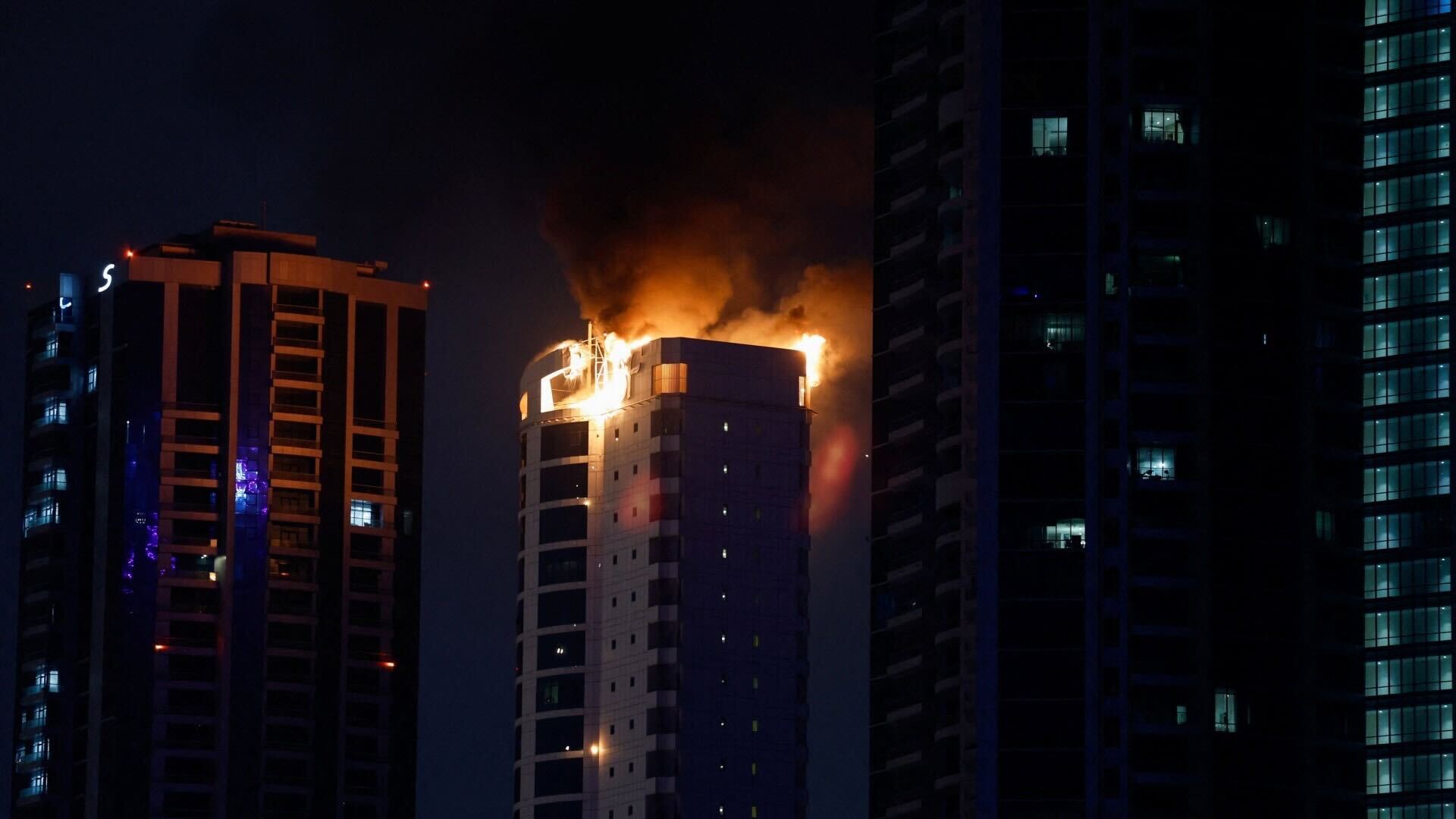
Separate from the protests, authorities have arrested at least 11 individuals for posting footage of Iranian attacks online, accusing them of misleading public opinion and “spreading fear in the hearts of citizens and residents.” Among those detained was prominent social media influencer and photojournalist Sayed Baqer al-Kamel, who documented a burning high-rise building in the Seef district.
The public prosecutor’s office has announced that those creating “fabricated visual content” face pretrial detention with potential two-year prison sentences and fines. Those accused of “glorification and promotion” of Iranian attacks will undergo urgent trials, continuing Bahrain’s pattern of suppressing documentation of unrest.
This crisis echoes previous suppression of dissent in Bahrain, including the mass uprisings of the early 1990s and 2011—both violently quelled by authorities with assistance from neighboring Gulf states. The current situation demonstrates how external military actions can inadvertently ignite internal tensions in strategically vital allied nations.