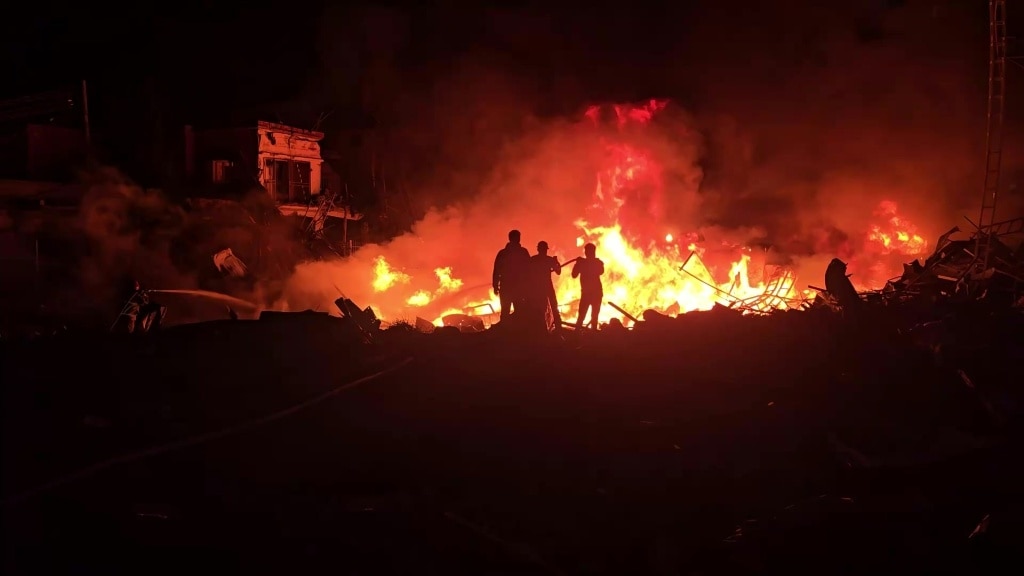
The Middle East conflict escalated dramatically on Thursday as Iran launched targeted strikes against Kurdish opposition groups in northern Iraq, while fresh explosions rocked Tehran amid expanding regional hostilities. The retaliatory actions mark a significant broadening of the war initiated by US-Israeli strikes that killed Iran’s supreme leader last Saturday.
Iran’s Revolutionary Guards confirmed operations against what they described as ‘anti-revolutionary’ Kurdish factions based in Iraq, following explicit warnings from Iranian security officials. Ali Larijani, secretary of Iran’s Supreme National Security Council, issued a stern caution: ‘Separatist groups should not misinterpret current circumstances as opportunity for action. We will not tolerate any provocations.’
The conflict has triggered substantial regional destabilization, with Iran simultaneously targeting US military installations across Gulf neighbors and Israel conducting operations in Lebanon. The strategic Strait of Hormuz, critical for global oil transit, has seen dramatic reduction in tanker traffic with reports indicating 90% decrease in operations according to market intelligence firm Kpler.
Economic repercussions intensified as IMF chief Kristalina Georgieva warned the conflict would ‘test global economic resilience yet again.’ Energy markets experienced significant disruptions with tanker incidents near Kuwait and China implementing fuel export restrictions. South Korea activated a $68 billion market stabilization fund in response to growing energy shortages.
Civilian casualties mounted across multiple fronts. Lebanese officials reported deaths in Palestinian refugee camps and drone strikes, while Iran’s IRNA news agency claimed over 1,045 military and civilian fatalities since conflict initiation—a figure that remains unverified independently. International diplomatic efforts intensified with China announcing special envoy deployment for mediation, though specific details remained undisclosed.
The United States maintained its military engagement as the Senate rejected legislation aimed at constraining presidential authority to continue strikes, ensuring ongoing operational flexibility for US forces in the region.