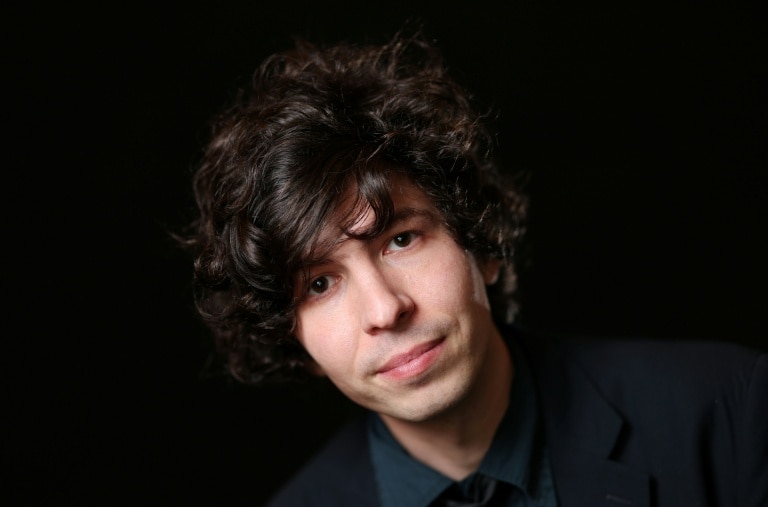
French animation director Ugo Bienvenu, whose hand-drawn film ‘Arco’ has earned an Oscar nomination, has taken a firm stance against artificial intelligence in artistic creation. The 38-year-old filmmaker argues that society’s growing reliance on AI represents an intellectual and creative danger rather than progress.
Bienvenu’s science fiction film presents a future where humanity lives in harmony with nature, deliberately excluding the robots and AI systems that dominate contemporary technological discourse. The director told AFP that his approach to science fiction serves as a deliberate counterpoint to current trends: ‘That’s why I make science fiction. It was to say to this generation: Maybe there are other paths, maybe there are other things to imagine.’
The Academy of Motion Picture Arts and Sciences has maintained a neutral position on AI technology in its Oscar consideration process. In April, the organization stated that ‘Generative Artificial Intelligence and other digital tools neither help nor harm the chances of achieving a nomination,’ emphasizing that human creative authorship remains the central criterion for judgment.
This season, two Oscar-eligible animated shorts that openly used AI failed to secure nominations. Bienvenu suggests this reflects broader industry skepticism, noting that conversations at the Oscars nominees luncheon in Beverly Hills revealed widespread resistance to AI implementation. ‘Everyone is more or less on the same page,’ he observed. ‘Nobody really wants to use it.’
The director joins a growing chorus of entertainment industry figures expressing concern about AI’s impact on creativity. In January, over 800 creatives including Scarlett Johansson, Cate Blanchett, and Guillermo Del Toro signed an open letter accusing AI companies of ‘theft.’ Del Toro, whose ‘Frankenstein’ adaptation competes for best picture this year, previously called AI-generated animation ‘an insult to life itself.’
Bienvenu warns that AI dependency risks intellectual weakening and the erosion of human experience. ‘It’s not about protecting our jobs, it’s about what makes us human,’ he asserts. The director believes fiction serves a crucial emotional purpose, helping people process life experiences without collapsing under pressure.
The filmmaker also highlights the physical and environmental costs of AI technology, suggesting that companies should be taxed for the massive water consumption required to cool server farms. One recent study found that AI’s water usage exceeds global bottled water consumption annually. ‘AI isn’t free,’ Bienvenu concludes. ‘It has physical repercussions and impacts on our subconscious.’