The United States recently convened an international summit focused on critical minerals, aiming to counter China’s overwhelming dominance in global supply chains for smartphones, weapons systems, lithium-ion batteries, and electric vehicles. The gathering brought together representatives from key nations including Argentina, Australia, Bolivia, Canada, Chile, Democratic Republic of Congo, India, Japan, South Korea, and the United Kingdom, alongside the European Union.
This initiative represents a significant shift in international trade dynamics that Canadian Prime Minister Mark Carney characterized as a fundamental ‘rupture’ to the rules-based global order. Despite ambitious American efforts to diminish China’s control over critical mineral production, the reality presents formidable challenges due to deeply entrenched Chinese investments and established production networks.
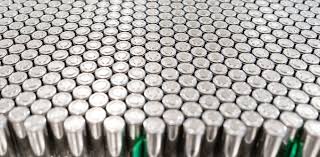
According to International Energy Agency data, China currently commands more than 80% of global battery production, with this figure rising to 90% for grid-scale batteries essential for storing renewable energy from wind and solar sources. Global battery sales have expanded sixfold since 2020, while manufacturing of grid-scale battery systems has grown twentyfold during the same period, largely driven by China’s cost-effective manufacturing model.
The US has intensified efforts to reduce Chinese influence in South America, which contains over 50% of the world’s known lithium deposits. Recent moves include the US government acquiring a 5% stake in Canada-based Lithium Americas in 2025, followed by another 10% acquisition in USA Rare Earth in February. The White House has also leveraged tariff threats and a $20 billion bailout package to negotiate new trade terms with Argentina, while the Inter-American Development Bank committed $140 million to enhance critical mineral production capacity across Latin America.
However, disengaging China from established production networks raises substantial questions about the strategic wisdom of disrupting a system that produces 80-90% of the world’s lithium-ion batteries. While the US pursues an ‘America first’ policy of onshoring production, China has strategically employed joint ventures and public-private partnerships to secure mineral access while offshoring the more environmentally challenging aspects of production.
Chinese company Ganfeng Lithium has maintained operations in Argentina for approximately a decade and continues expanding through joint ventures with Canadian firm Lithium Americas in the Pozuelos, Pastos Grandes, and Cauchari-Olaroz salt flats. The majority of Ganfeng’s production supplies battery and EV manufacturing hubs in China and Southeast Asia.
The political landscape across South America introduces additional complexity. Recent electoral victories by right-wing leaders in Argentina, Bolivia, and Chile potentially favor US interests, particularly in Argentina where President Javier Milei has cultivated strong ties with the Trump administration. However, Chile’s situation remains less certain due to the state’s dominant role in copper markets, domestic debates about lithium nationalization, and enduring Chinese diplomatic influence.
Major questions persist regarding American companies’ capacity and willingness to assume China’s role in global lithium-ion battery production. US-based Albemarle Corporation, while one of the world’s largest lithium companies, remains publicly traded with diverse international investors. Beyond South America, global lithium production continues to be dominated by American, Chinese, and Australian firms, nearly all maintaining joint ventures with Chinese companies like Tianqi and Ganfeng.
The North American economy lacks both the capacity and wage competitiveness to replace China’s position in producing and processing critical minerals for batteries, energy storage systems, and electric vehicles. Developing a supply chain capable of outperforming China’s established network appears improbable given current economic and geopolitical realities.