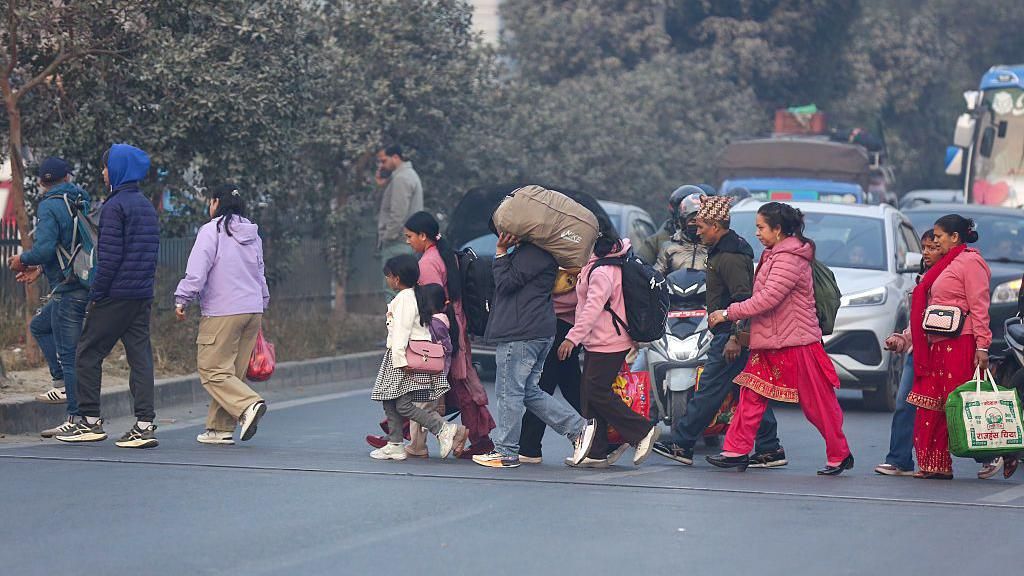
Nepal is witnessing an unprecedented domestic migration as approximately 800,000 citizens have departed the densely populated Kathmandu Valley over the past week, undertaking arduous journeys to their ancestral hometowns to participate in Thursday’s pivotal parliamentary elections. This massive movement represents a significant portion of the valley’s population, where about 10% of Nepal’s 30 million residents reside for employment and educational opportunities.
The extraordinary exodus has created remarkable scenes across the Himalayan nation, with photographs capturing extensive crowds congregating along major highways amidst fleets of jeeps, minibuses, and vans. Transportation authorities have reported severe traffic congestion lasting several hours throughout the weekend as citizens comply with electoral regulations requiring them to vote in their registered constituencies—typically their birthplaces.
This election marks Nepal’s first national vote since September 2025, when youth-led anti-corruption demonstrations successfully toppled the previous government. The political significance of this moment is not lost on voters like Saroj Chapagain, who endured a 14-hour bus journey from Kathmandu to his hometown in Bardiya district. “I have come home to cast my ballot in order to safeguard the constitution and the system,” the 38-year-old stated, emphasizing that while his single vote might not determine the outcome, it carries profound symbolic importance for Nepal’s democratic foundations.
However, electoral enthusiasm is not universal. Ophthalmologist Rabindra Singh Thakuri represents a segment of the population expressing skepticism toward political newcomers. He and his colleagues prefer established political parties, fearing that inexperienced leadership might hinder national progress.
The electoral process will involve approximately 19 million eligible voters, including nearly one million first-time participants. They will select 275 parliament members through a mixed electoral system: 165 via first-past-the-post voting and the remainder through proportional representation. Notably, nearly one-third of the 3,400 candidates are under 40 years old, reflecting a generational shift in Nepalese politics.
In preparation for the election, authorities have suspended all non-essential public and private transportation from Wednesday through Thursday, while air travel continues uninterrupted. The government has additionally declared Wednesday through Friday as public holidays, coinciding with both the election and the Fagu festival (also known as Holi), celebrated by South Asian communities worldwide.
Among the most closely monitored races is the Jhapa-5 constituency, traditionally a stronghold of former Prime Minister KP Sharma Oli, who resigned during last year’s protests. He faces a formidable challenge from ex-rapper Balendra Shah, who gained initial prominence through provocative musical critiques targeting Nepal’s political establishment.