Global energy markets experienced significant turbulence Monday as military escalation in the Middle East directly targeted critical energy infrastructure, triggering substantial price increases and supply disruptions. The conflict’s expansion into energy production facilities has created immediate impacts on worldwide energy flows and pricing structures.
QatarEnergy, the state-controlled energy corporation, confirmed suspension of liquefied natural gas production following Iranian strikes targeting two major gas processing facilities. This development occurred alongside operational disruptions at Saudi Arabia’s massive Ras Tanura refinery, where drone attacks caused fires and partial shutdowns. Simultaneously, Abu Dhabi reported drone assaults on its energy terminal infrastructure.
The supply disruptions produced immediate market reactions, with European natural gas prices closing 39% higher after briefly exceeding 50% gains during trading sessions. Brent crude futures surged beyond $82 per barrel during early trading, representing a 13% increase, before settling at $77.74 with a 7.3% daily gain. The US benchmark West Texas Intermediate concluded at $71.23 per barrel, marking a 6.3% increase.
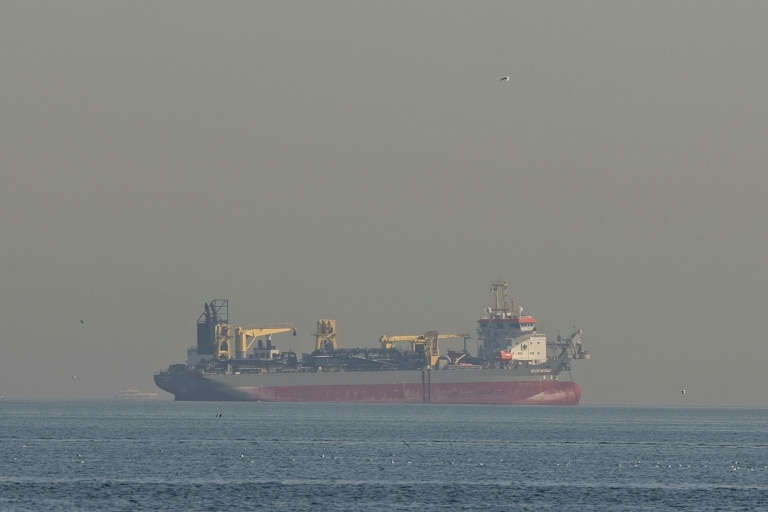
Parallel to production facility attacks, the strategic Strait of Hormuz experienced a de facto closure as major shipping corporations including MSC, Maersk, CMA CGM, Hapag-Lloyd, and Cosco suspended transit operations. Although not officially closed, soaring insurance costs and security concerns have effectively halted maritime traffic through this critical waterway that typically handles approximately 20% of global oil and LNG supplies.
Rystad Energy analysis indicates the maritime exodus prevents approximately 15 million barrels daily from reaching international markets. Senior Vice President Jorge Leon noted that whether through forced closure or risk avoidance, the impact on energy flows remains substantially identical. The situation has prompted discussions about potential strategic petroleum reserve releases if disruptions persist.
Asian nations face particular vulnerability as primary recipients of approximately 80% of Hormuz-transited petroleum, according to International Energy Agency data. Europe likewise confronts significant energy security concerns as a major destination for Qatari LNG exports, with markets already strained following severe winter demand.
Analysts from Eurasia Group projected potential Brent crude prices approaching $100 per barrel under worst-case scenarios involving permanent damage to Iranian export infrastructure and prolonged Hormuz disruptions. While current projections suggest a more probable $75-$85 range, market observers note that sustained elevated prices could influence broader economic and political dynamics, including potential impacts on US midterm elections.
Financial markets demonstrated mixed reactions, with Wall Street closing unevenly as investors weighed conflict duration expectations. Oxford Economics anticipates Iran will struggle to maintain prolonged Strait disruptions, projecting oil prices peaking near $80 per barrel in second quarter before declining toward $60, contingent upon conflict resolution and regional stability restoration.