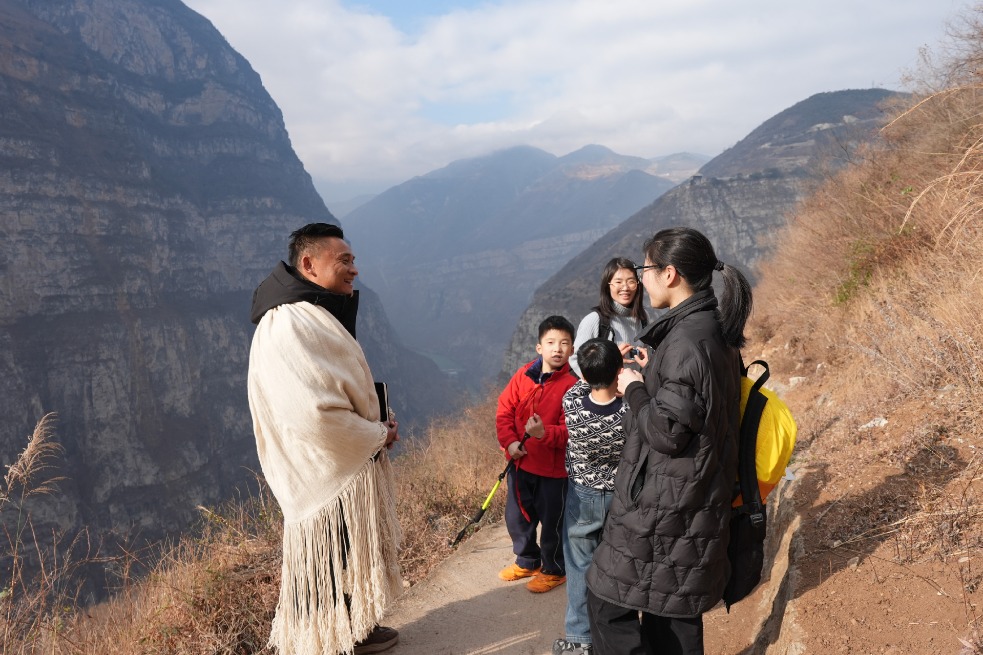
Perched dramatically on the edge of the Dadu River Grand Canyon in Sichuan province, Gulu village has undergone a remarkable transformation from remote isolation to thriving community under the leadership of NPC deputy Zheng Wangchun. The once-inaccessible Yi ethnic village, where transportation previously required three to four hours of arduous travel, now connects to the outside world via a modern cableway that reduces the journey to mere minutes.
Zheng, who serves as both village committee head and Party committee secretary, has spearheaded an innovative development model that harmoniously blends agriculture, culture, and tourism. The strategic initiative has revitalized the mountainous community, creating new economic opportunities while preserving its cultural heritage.
The village’s renaissance includes the establishment of visitor homestays, strategically positioned scenic photo spots showcasing the canyon’s breathtaking vistas, and the expansion of specialized agricultural products including walnuts, Sichuan pepper, and goat farming. This multifaceted approach has generated sustainable income streams for residents while sharing the village’s unique character with visitors.
As a National People’s Congress deputy, Zheng has leveraged his position to address broader rural challenges, submitting policy recommendations focused on expanding internet connectivity in remote areas and balancing wildlife conservation with agricultural livelihoods. His grassroots philosophy remains centered on community wellbeing, noting that ‘the smiles of villagers are the most valuable rewards for grassroots work.’
The Gulu village model demonstrates how targeted infrastructure investment combined with culturally-sensitive development can create thriving rural communities even in geographically challenging environments, offering valuable insights for rural revitalization efforts nationwide.