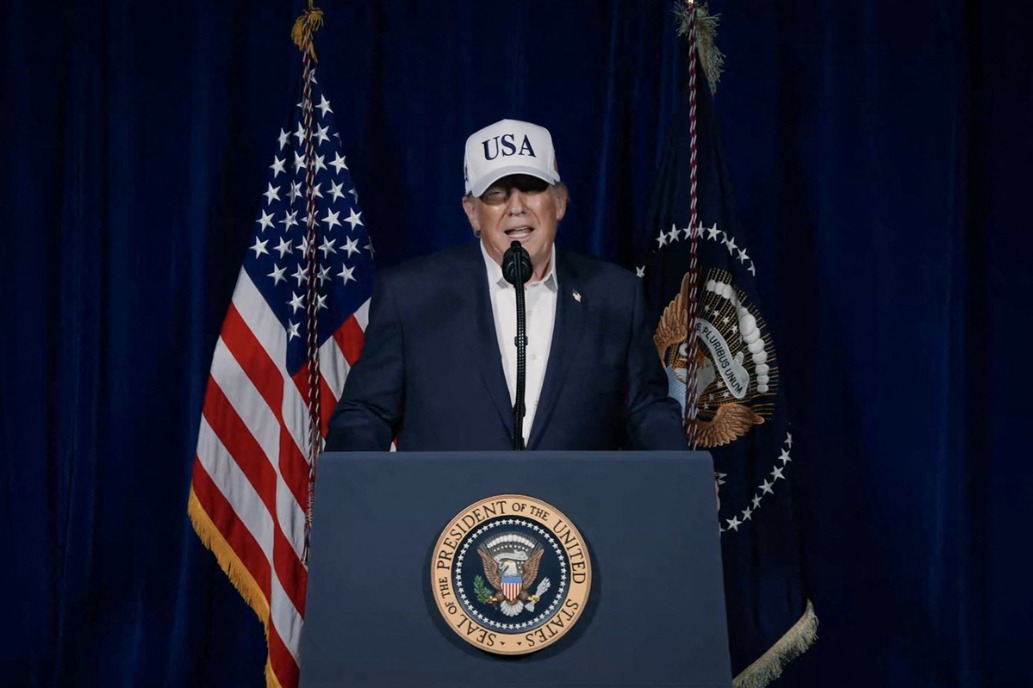
In a significant development following coordinated US-Israeli military operations, President Donald Trump has asserted that achieving a diplomatic resolution with Iran has become substantially more feasible. The statement came during a televised interview on Saturday evening, mere hours after confirmation of Supreme Leader Ayatollah Ali Khamenei’s death.
Trump, in a detailed phone conversation with CBS News, characterized the recent military campaign as strategically effective, suggesting it has created unexpected opportunities for negotiation. ‘The pathway to diplomacy appears much clearer now than it was just twenty-four hours ago, obviously,’ the President remarked, indicating a calculated shift in geopolitical dynamics.
When questioned about Iran’s leadership transition, Trump acknowledged the emergence of ‘promising candidates’ to succeed Khamenei, though he declined to specify particular individuals or factions. This commentary suggests Washington is monitoring Tehran’s political reorganization with strategic interest.
Regarding Iran’s retaliatory measures, Trump displayed measured satisfaction, noting the response fell substantially below anticipated levels. ‘The countermeasures align with our projections, though we had prepared for significantly more robust engagement,’ he stated, implying US defenses had successfully mitigated potential threats.
Earlier that day, Trump had utilized social media to announce the continuation of military operations, emphasizing that ‘precision bombing campaigns will persist uninterrupted throughout the coming week, or as long as operational requirements dictate.’ This dual-track approach—combining sustained military pressure with diplomatic overtures—marks a complex evolution in US strategy toward Iran.
The administration appears to be navigating a delicate balance between demonstrating military resolve and creating space for potential negotiations amid Iran’s unprecedented leadership crisis.