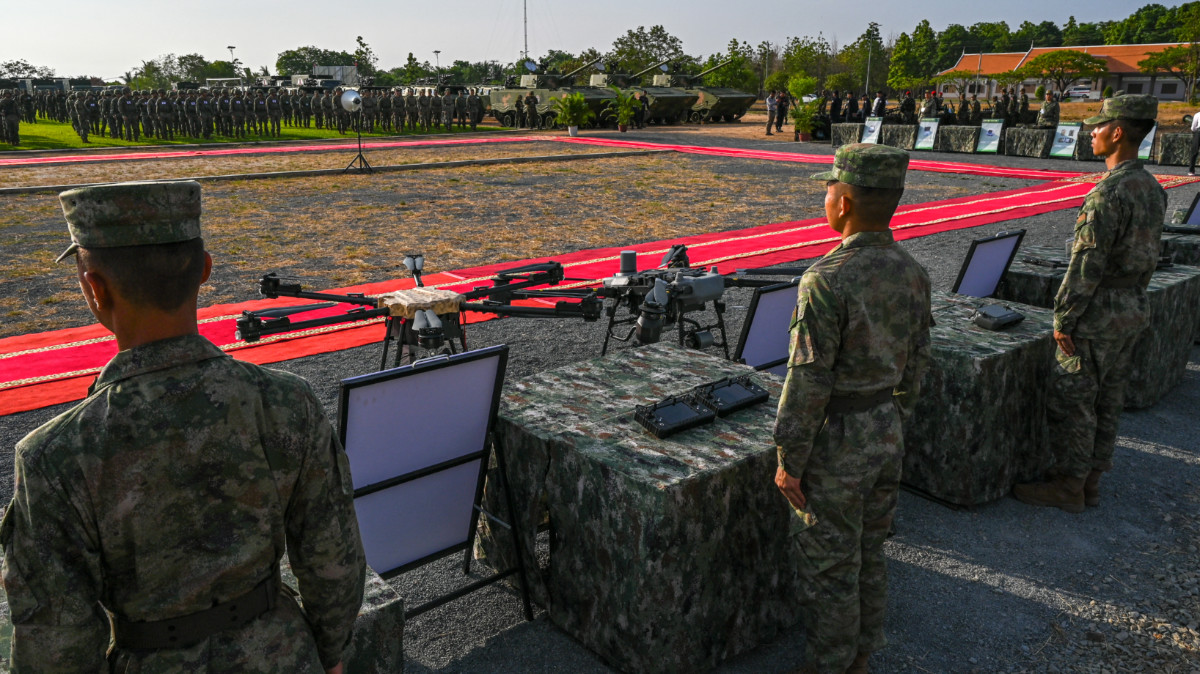
Amid escalating tensions and a potential US military confrontation with Iran, China is significantly expanding its military support to Tehran by supplying both offensive loitering munitions and advanced air defense systems, according to three officials familiar with the matter who spoke with Middle East Eye.
Intelligence sources confirm that Beijing has delivered kamikaze drones—small, offensive unmanned aerial systems—alongside additional defensive weaponry. This strategic arms transfer occurs as the United States maintains its largest military presence in the Middle East since the 2003 Iraq invasion, featuring dual aircraft carrier strike groups and advanced fighter squadrons in the region.
The comprehensive military assistance includes HQ-16 and HQ-17AE surface-to-air missile batteries, which Iran urgently sought following substantial losses to its air defense network during conflicts with Israel. Beyond immediate defensive needs, China and Iran are reportedly negotiating more sophisticated offensive capabilities, including CM-302 anti-ship cruise missiles with a 290-kilometer range and the advanced DF-17 hypersonic glide missile system capable of evading modern air defenses.
This deepening military partnership operates through an oil-for-arms arrangement, with approximately 90% of Iran’s crude exports reportedly flowing to China as payment. Notably, Beijing has indirectly communicated these transfers to US-aligned Arab governments, potentially signaling China’s commitment to Tehran’s defense and attempting to deter American military action.
The arms relationship represents a significant shift in regional dynamics, with China potentially filling gaps left by Russia’s diverted attention to its war in Ukraine. While Russia recently agreed to supply Iran with Verba man-portable air defense systems, China’s dominance in drone manufacturing (producing 80% of global components) positions it as Tehran’s most capable military supplier amidst international sanctions and domestic production challenges.