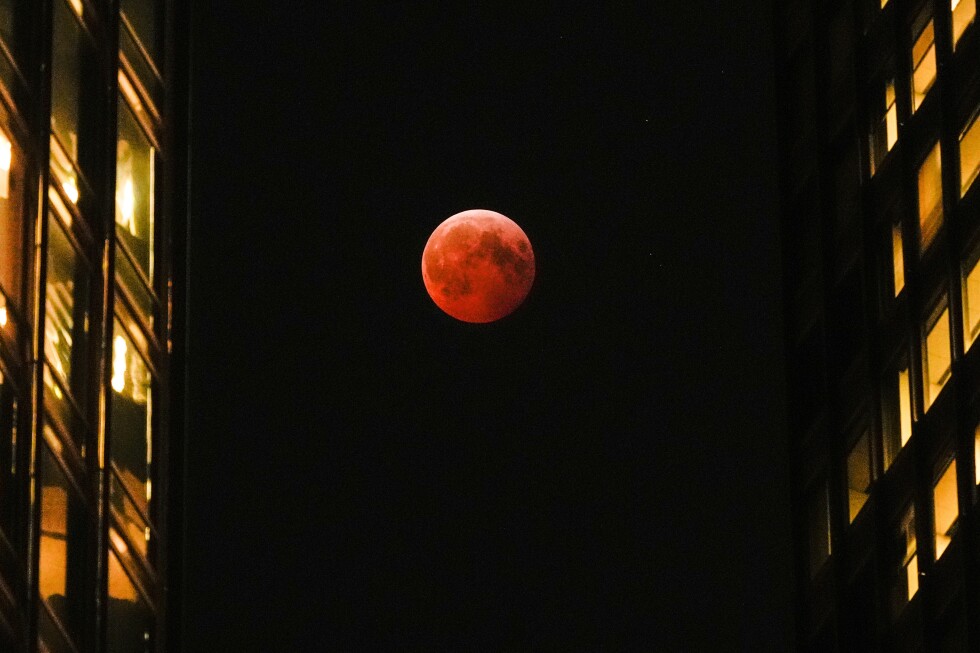
Skywatchers across the Americas and Pacific regions are preparing for a remarkable astronomical event as the last total lunar eclipse until 2028 prepares to illuminate night skies with its characteristic crimson glow. This extraordinary celestial phenomenon will be fully visible during morning hours throughout North America, Central America, and western South America on Tuesday, while observers in Australia and eastern Asia will witness the spectacle during evening hours.
The cosmic alignment occurs when Earth positions itself directly between the sun and full moon, casting our planet’s shadow across the lunar surface. The resulting ‘blood moon’ effect emerges from sunlight filtering through Earth’s atmosphere, scattering blue light while allowing red wavelengths to illuminate the moon’s surface. This atmospheric filtering creates the stunning reddish-orange appearance that gives the phenomenon its dramatic name.
Astronomers note that the event will unfold gradually over several hours, with the period of totality—when the moon is completely within Earth’s shadow—lasting approximately one hour. Unlike solar eclipses requiring protective eyewear, lunar eclipses present no viewing hazards, allowing observers to enjoy the spectacle with unaided vision under clear sky conditions.
This eclipse continues a pattern of celestial events, occurring just two weeks after an annular ‘ring of fire’ solar eclipse captivated viewers in Antarctica. According to NASA’s eclipse patterns, between four and seven eclipses typically occur annually, often clustering together due to orbital alignments. Another partial lunar eclipse is scheduled for August, with visibility spanning the Americas, Europe, Africa, and western Asia.
Astronomer Bennett Maruca of the University of Delaware recommends checking local timing through forecasting applications or online celestial calendars, noting that observers need not watch continuously to appreciate the moon’s gradual transformation as Earth’s shadow creates a dramatic celestial display.