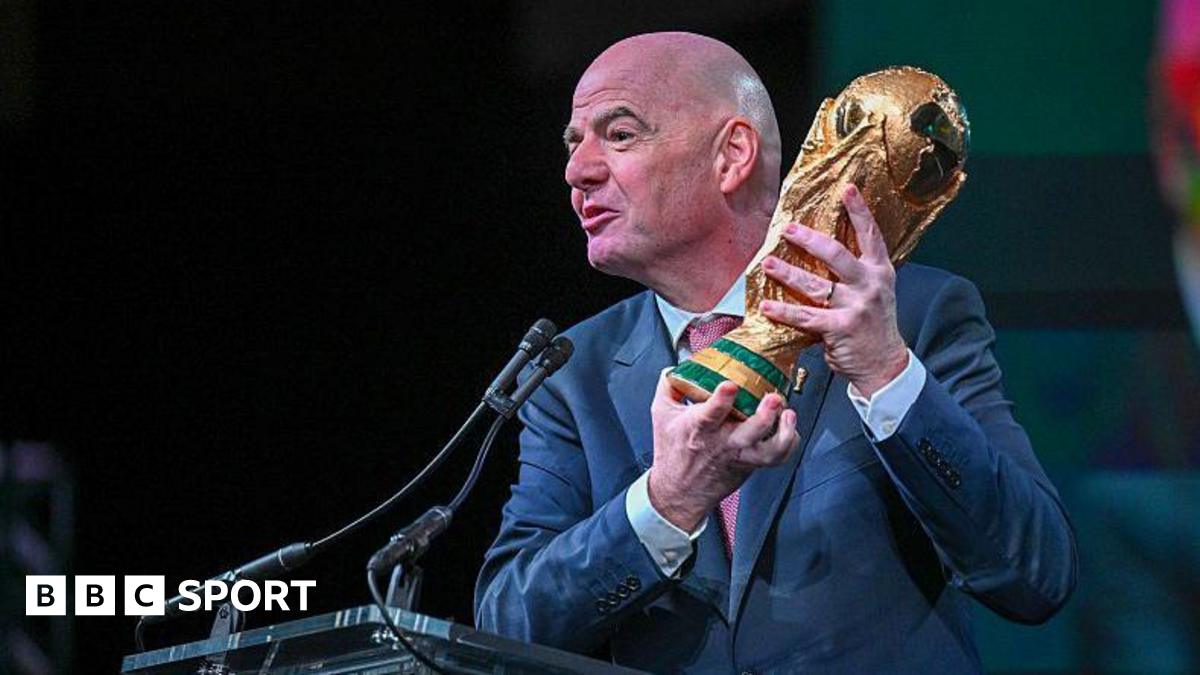
A transformative yet divisive era in global football governance marks its tenth anniversary as Gianni Infantino completes a decade presiding over FIFA. Assuming leadership amidst unprecedented institutional crisis following Sepp Blatter’s corruption-tainted resignation, the Swiss-Italian administrator inherited a governing body facing a $550 million financial deficit and catastrophic credibility loss.
The restoration journey commenced with radical financial redistribution policies. Infantino’s flagship FIFA Forward program revolutionized funding mechanisms, injecting $2.8 billion across 211 member associations through 1,600 development projects. This financial engineering produced staggering results: projected revenues of $13 billion for the 2023-2026 cycle, representing monumental growth from the precarious situation inherited in 2016.
This economic renaissance however emerges alongside escalating controversies. The expansion of flagship tournaments—including the 48-team World Cup format and revamped Club World Cup—has drawn criticism from player unions and European stakeholders. Infantino’s unorthodox diplomatic approach has manifested through close ties with controversial figures, most notably U.S. President Donald Trump who received FIFA’s inaugural Peace Prize despite widespread skepticism.
Geopolitical tensions peaked when European federations staged symbolic walkouts protesting Infantino’s perceived prioritization of political relationships over football governance. The awarding of the 2034 World Cup to Saudi Arabia, coupled with Qatar 2022’s human rights controversies, has intensified scrutiny about ethical consistency within FIFA’s decision-making processes.
Infantino’s personal leadership style remains equally polarizing. His theatrical pronouncements—including the much-criticized “Today I feel Qatari” speech—contrast with substantial financial achievements for developing football nations. A 33% salary increase to $2.9 million, while independently determined, ironically places his compensation near Blatter’s disputed earnings level.
Despite European criticism, Infantino maintains impregnable support from Asia and Africa, regions that have benefited most from financial redistribution. With term limit interpretations potentially enabling extended leadership, the football world contemplates a future where economic prosperity increasingly contends with ethical governance questions.