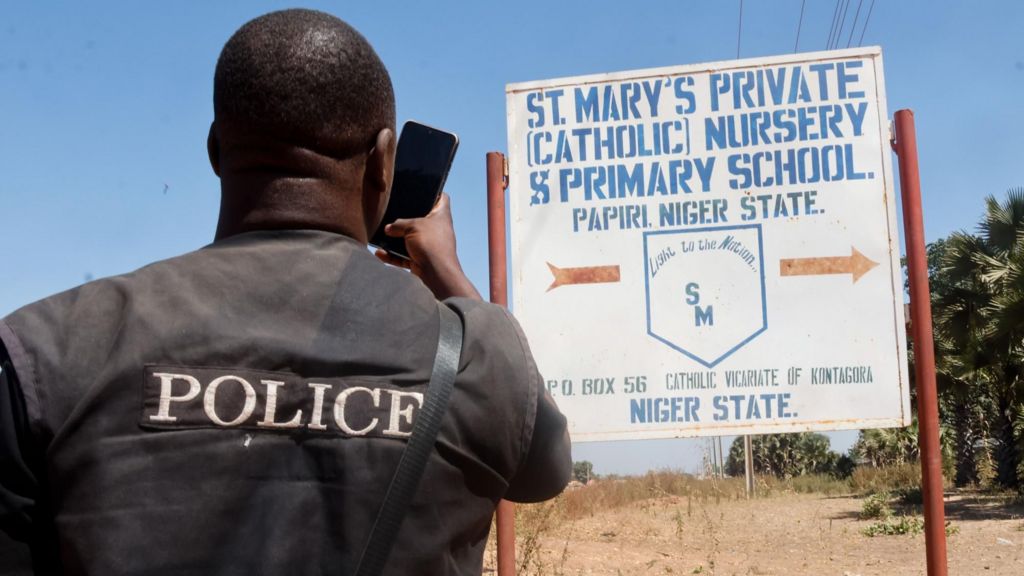
The Nigerian government has issued a forceful denial of media reports claiming it paid substantial ransom money to Islamist militant group Boko Haram to secure the release of over 200 students and staff members abducted from St. Mary’s Catholic boarding school last November. Information Minister Mohammed Idris characterized the AFP news agency’s report as “completely false and baseless,” asserting that the allegations undermine the professionalism and integrity of the nation’s security forces.
The controversial report, citing unnamed intelligence sources, suggested Nigeria had paid approximately 40 million naira ($30,000) per captive, with total payments reaching 2 billion naira ($1.5 million). The report further claimed the ransom was delivered via helicopter to Boko Haram’s enclave in Gwoza, Borno state—an assertion Minister Idris dismissed as “fiction.”
In a separate security development, Police Chief Kayode Egbetokun, a close ally of President Bola Tinubu, has resigned citing “pressing family considerations” one year before his term expiration. His deputy, Tunji Disu, has been appointed acting chief amid escalating security challenges nationwide.
The school abduction incident represents part of a broader pattern of kidnap-for-ransom operations that have become increasingly prevalent across Nigeria. Security analysts note that while Boko Haram remains most active in northeastern Borno state, splinter factions and criminal networks now operate extensively throughout Nigeria’s northwestern and north central regions.
The controversy emerges during a period of heightened diplomatic scrutiny from the United States. A recent congressional delegation report presented at the White House recommended sweeping security and trade measures addressing what it described as “long-running persecution of Christians in Nigeria.” The report called for new bilateral security agreements, targeted sanctions, and legal reforms to protect religious freedom—recommendations the Nigerian government has yet to address publicly.
Nigeria continues to grapple with the legacy of Boko Haram’s 2014 abduction of over 200 schoolgirls from Chibok, which sparked a devastating trend of mass kidnappings. Despite a 2022 law criminalizing ransom payments, enforcement remains challenging as families and intermediaries frequently negotiate with captors to secure loved ones’ release.