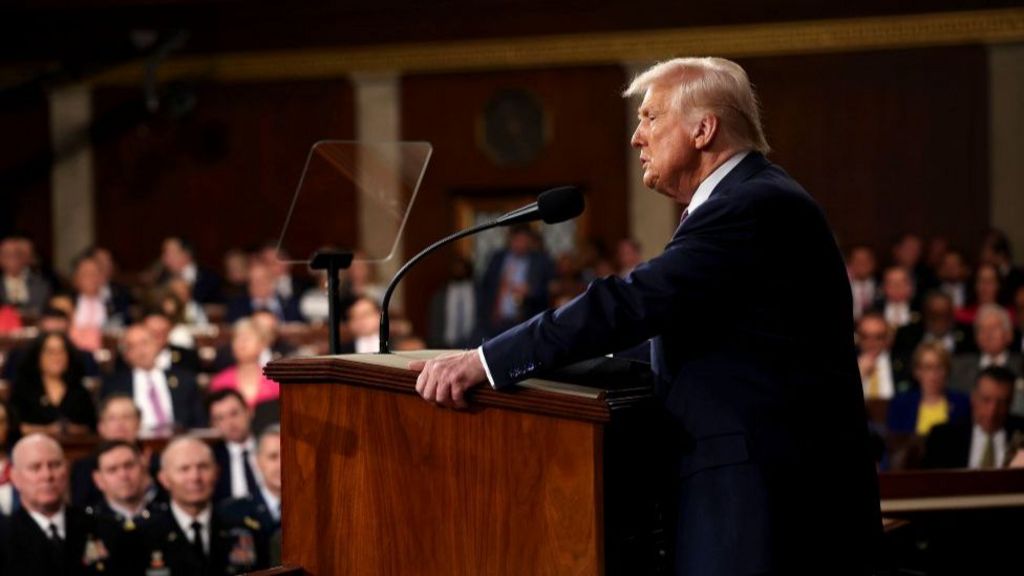
President Donald Trump approaches Tuesday’s State of the Union address at a critical juncture in his second term, facing mounting political challenges and declining public approval ratings. This nationally televised speech represents his final major opportunity to sway voter sentiment before November’s midterm elections, which could determine whether Republicans maintain congressional control or face Democratic opposition that might lead to legislative gridlock and renewed impeachment threats.
Throughout the past year, Trump has pursued an aggressive transformation of presidential power, implementing sweeping immigration restrictions, realigning foreign alliances, and challenging fundamental checks and balances within the American political system. While achieving substantive policy victories both domestically and internationally, many initiatives have proven deeply divisive among the American public.
Recent polling indicates significant erosion in Trump’s popular support, with CNN and Washington Post surveys showing approval ratings of just 36% and 39% respectively. His traditional strongholds—immigration and economic policy—have become particular vulnerabilities. The administration’s hardline immigration tactics, including deploying federal agents to cities like Minneapolis, have faced widespread protests and operational setbacks. Similarly, trade policies featuring aggressive tariffs have been ruled illegal by the Supreme Court, creating economic uncertainty despite stock market highs and low unemployment.
According to rhetorical scholar Professor Robert Rowland, Trump faces an unusual challenge for this address: broadening his appeal beyond his core supporters rather than employing his characteristic combative style. Historically, State of the Union speeches serve to unite rather than divide, requiring a diplomatic approach that doesn’t come naturally to this president.
The address may also address national security concerns, including potential military preparations regarding Iran—a foreign policy development that could dramatically reshape the political landscape. Ultimately, Trump’s performance will reveal whether he can demonstrate the humility and conciliatory tone needed to reverse his declining popularity, or whether he will instead double down on controversial positions that have defined his presidency.