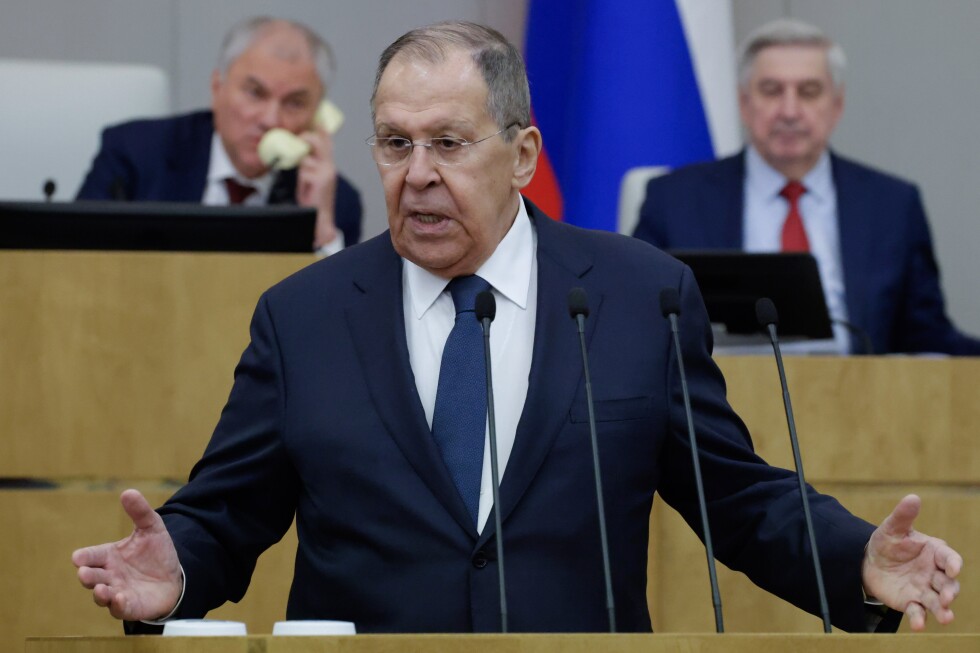
MOSCOW — In a significant development regarding nuclear arms control, Russia has declared it will continue honoring the expired New START treaty limitations provided the United States demonstrates equivalent compliance. Russian Foreign Minister Sergey Lavrov announced this position Wednesday during an address to the lower house of parliament, marking a crucial moment in post-treaty nuclear diplomacy.
The New START agreement, which formally expired on February 5, had represented the final bilateral nuclear arms control pact between the world’s two largest nuclear powers. Its expiration created the first situation in over fifty years without active constraints on Russian and American atomic arsenals, raising global concerns about a potential uncontrolled arms race.
Lavrov emphasized that Russia’s moratorium on exceeding treaty limits would remain effective “as long as the U.S. doesn’t exceed these limits.” He stated that Moscow would adopt “a responsible and balanced approach based on analysis of U.S. military policies,” indicating that Russian compliance would be directly contingent on American actions.
The foreign minister expressed cautious optimism about Washington’s intentions, noting that “we have reason to believe that the United States is in no hurry to abandon these limits and that they will be observed for the foreseeable future.” He pledged that Russia would “closely monitor how things are actually unfolding” and remain prepared to “work actively on a new agreement” if American cooperation materializes.
This development follows recent diplomatic engagements in Abu Dhabi, where Russian and U.S. negotiators discussed nuclear arms control alongside Ukraine peace talks. Kremlin spokesman Dmitry Peskov confirmed that both parties recognized “the need to start talks on the issue as soon as possible,” though he dismissed speculation about any informal agreements to extend the treaty.
The original New START treaty, signed in 2010 by Presidents Barack Obama and Dmitry Medvedev, had established strict limits of 1,550 deployed warheads and 700 delivery systems for each nation. The agreement included comprehensive verification mechanisms through on-site inspections, though these were suspended in 2020 due to the COVID-19 pandemic and never resumed.
Russian President Vladimir Putin had previously suspended Moscow’s participation in the treaty in February 2023, citing NATO’s hostile stance toward Russia amid the Ukraine conflict, while simultaneously emphasizing that Russia would continue respecting the pact’s numerical limits.