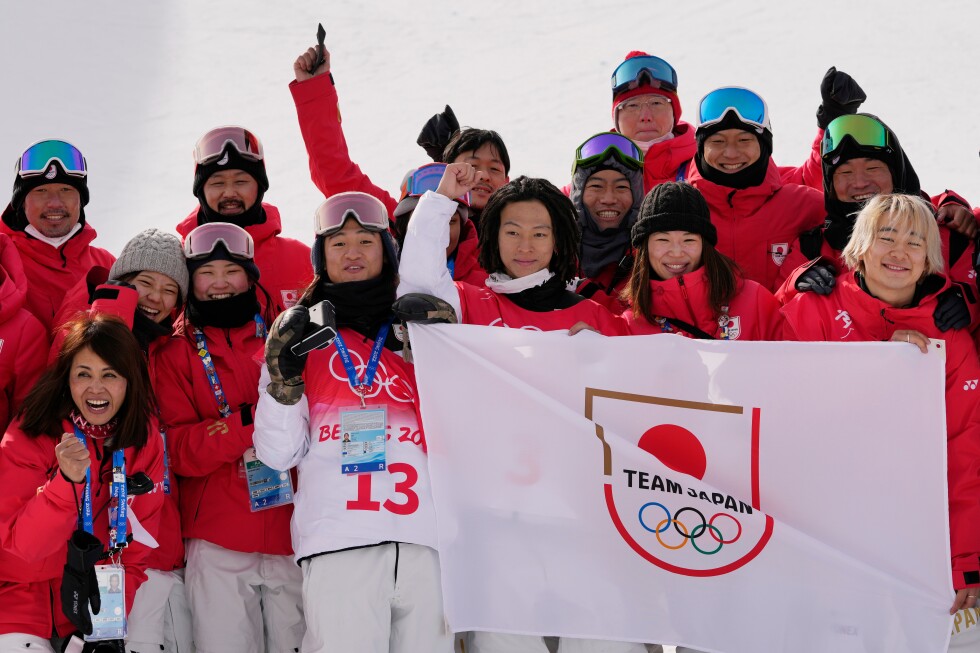
LIVIGNO, Italy (AP) — A dramatic power shift is unfolding in Olympic snowboarding as American dominance in the halfpipe gives way to Japanese supremacy. Where U.S. athletes once routinely claimed podium positions in the sport they pioneered, only defending champion Chloe Kim now remains as a legitimate medal contender for Team USA in current Winter Games competitions.
This tectonic change stems from contrasting national approaches to sporting infrastructure and athlete development. While Japan has aggressively invested in training facilities—including dry-slope complexes, expensive safety airbags, and year-round training programs—the United States has witnessed an alarming disappearance of halfpipes across its resorts. Industry experts estimate fewer than six operational halfpipes remain nationwide.
The consequences are starkly visible in Olympic results. Between 2002 and 2010, American riders captured 12 of 18 available halfpipe medals while Japan won none. In the subsequent three Olympics, the U.S. secured just six medals with only one (Shaun White’s 2018 gold) coming from the men’s competition, while Japan collected five medals, four by male athletes.
Olympic champion Kelly Clark, who emerged from Vermont’s now-diminished halfpipe scene, expresses concern about the sport’s accessibility. ‘If I were looking 15 years down the road at halfpipe and how common that will be at a resort, that I would say could be a little concerning,’ Clark noted. ‘Will it be that relatable sport that everyone can kind of watch, and participate in?’
The infrastructure challenge is compounded by economic realities. Resort operators increasingly favor slopestyle courses—added to the Olympics in 2014—which require less expensive construction and maintenance while appealing to broader audiences. Constructing a competition-grade 22-foot halfpipe demands specialized engineering skills and significant ongoing upkeep.
Shannon Dunn-Downing, 1998 bronze medalist, posed the existential question in a recent Slush Magazine editorial: ‘Is Halfpipe Dead?’ She observed that poorly maintained pipes go unused, creating a vicious cycle where resorts see little value in investing in quality facilities.
Meanwhile, Japan has built what Rick Bower, director of the U.S. Ski & Snowboard program, describes as an ‘army’ of developmental athletes. Decades of systematically sending large teams overseas for training have evolved into comprehensive training camps in Switzerland with dozens of riders and multiple coaches.
This systematic approach extends beyond the halfpipe. In big air events at the current Games, Japan has claimed three of six medals while the United States produced just one finalist and no podium finishes.
Zach Nigro, Burton’s senior sports marketing director, suggests cultural factors may contribute to Japan’s success: ‘Their thought might be, it’s a difficult discipline, but if you’re going to be the best, then master the most difficult discipline.’
American officials acknowledge the challenge and are implementing corrective measures, including a potential $65 million endowment aimed at reclaiming dominance when the Olympics return to Salt Lake City in 2034. As Bower conceded: ‘Because of [past complacency], we’re now in a position where we’re behind and we need to do some catch-up.’