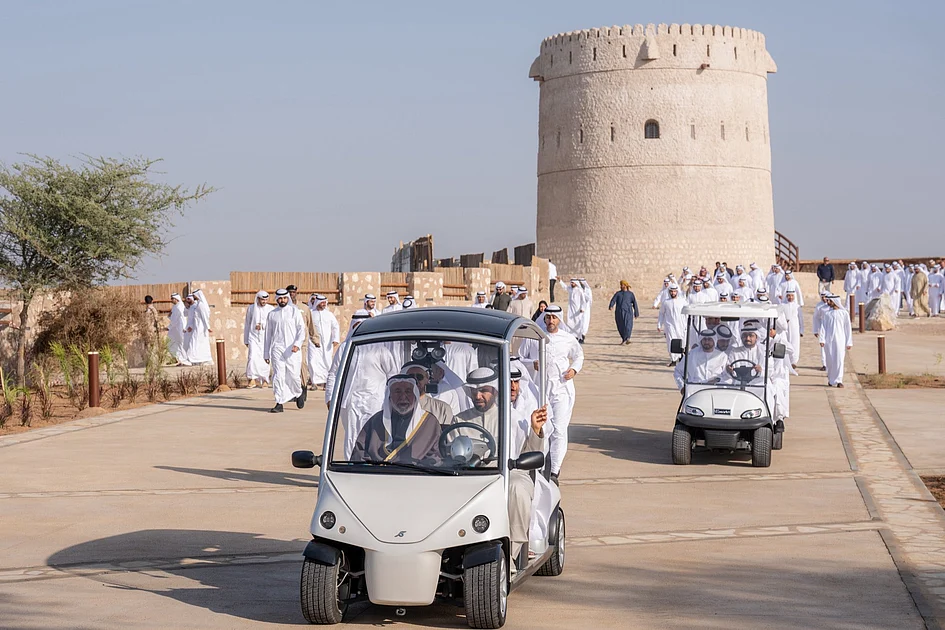
Sharjah’s historic oasis city of Al Dhaid has dramatically enhanced its tourism appeal with the inauguration of three significant cultural attractions, forming an integrated heritage circuit that blends environmental education, historical preservation, and traditional commerce.
Under the patronage of Sharjah’s Ruler, the newly unveiled destinations include the Al Dhaid Wildlife Museum, the meticulously restored Al Mudharsa Tower, and the palm-shaded Souq Sharia’t Al Dhaid. These developments create a comprehensive visitor experience that showcases the Central Region’s unique ecological systems, defensive architecture, and traditional market culture.
The Al Mudharsa Tower, standing guard at the northeastern entrance to Al Dhaid Oasis, has been rehabilitated using traditional materials and archaeological standards to preserve its original architectural character. Historically part of the area’s defensive network, this watchtower played a crucial role in monitoring farmland and water sources. Its cultural significance was recognized in 2023 when it was inscribed on the ICESCO World Heritage List alongside Al Dhaid Fort and Falaj Al Dhaid.
Adjacent to the historic falaj irrigation system, Souq Sharia’t Al Dhaid features 34 retail units including cafes, restaurants, and outlets supporting productive families, small businesses, and youth-led ventures. The market’s architecture draws inspiration from desert elements while reviving the area’s historic role as a trading hub. Enhanced with a camel track, viewing arcades overlooking palm groves, and multiple entrances connecting to nearby heritage sites, the souq is projected to stimulate tourism while creating sustainable opportunities for local entrepreneurs.
The centerpiece of these developments is the Al Dhaid Wildlife Museum, established as a major environmental education hub. The museum features specialized galleries dedicated to desert ecosystems, with separate halls for plants, insects, birds, and desert animals. Through interactive displays, educational models, and digital applications, visitors gain insights into biodiversity, climate adaptation, and ecological balance. The facility further supports research with dedicated laboratories, environmental education spaces, and a children’s hall designed to foster early interest in nature conservation.
This strategic development represents a significant investment in cultural tourism infrastructure that simultaneously preserves heritage, promotes environmental awareness, and supports local economic development through sustainable tourism initiatives.