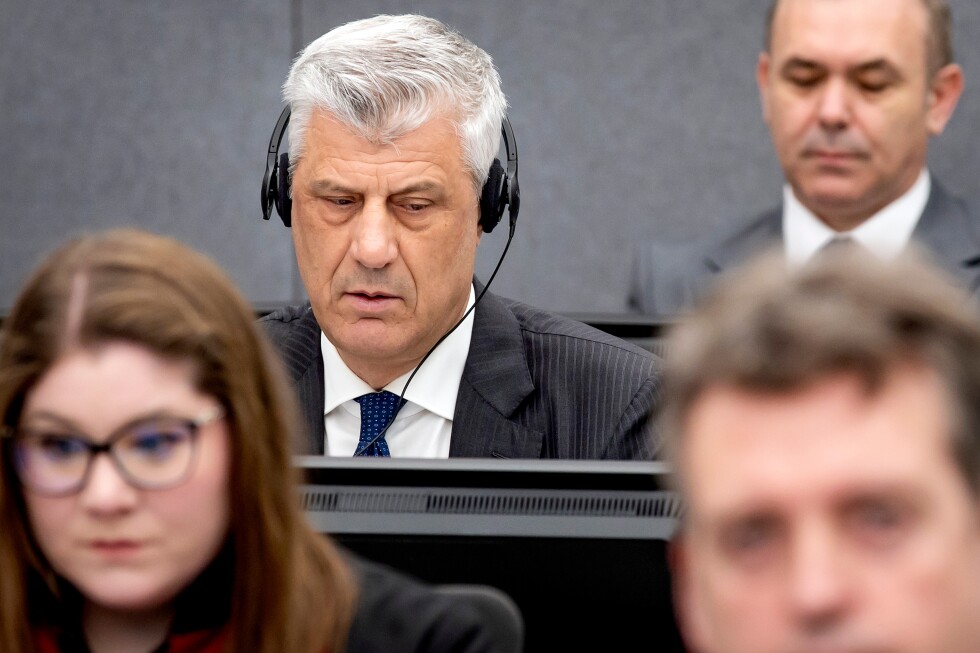
THE HAGUE, Netherlands — Prosecutors at the Kosovo Specialist Chambers delivered a powerful closing statement Monday, asserting they possess “overwhelming evidence” demonstrating former Kosovo President Hashim Thaci and three co-defendants orchestrated a systematic campaign of murder and torture against perceived traitors during the nation’s independence conflict.
Thaci, who resigned from presidential office in 2020 to face justice, stands accused alongside Kadri Veseli, Rexhep Selimi, and Jakup Krasniq on ten counts of war crimes and crimes against humanity committed during the 1998-99 war for independence from Serbia. The defendants, all former commanders of the Kosovo Liberation Army (KLA), allegedly targeted political opponents and civilians suspected of collaboration.
Prosecutor Kimberly West revealed that witnesses and victims demonstrated extraordinary courage by testifying despite operating in a “climate of intimidation.” Their testimonies, she argued, paint a consistent picture of a coordinated policy to eliminate perceived enemies through extrajudicial means.
The court, which operates within Kosovo’s legal system but is based in the Netherlands with predominantly international staff, was established with EU backing amid concerns about witness safety. These concerns proved justified when, in 2022, two leaders of a Kosovo war veterans’ association were convicted for witness intimidation through leaking confidential documents.
Prosecutors are seeking 45-year prison sentences for all four defendants, who have maintained their innocence throughout the proceedings. Thaci, known by his wartime nickname “The Snake,” declared himself “fully not guilty” when the trial commenced in 2023, with his co-defendants echoing similar pleas.
The case represents a complex chapter in Kosovo’s history. Thaci, once celebrated by Western leaders as a freedom fighter who helped negotiate the 1999 peace agreement, now faces justice for alleged atrocities committed during that same conflict. Many Kosovars view the tribunal as a historical injustice that attempts to equate their liberation struggle with Serbian aggression, which resulted in approximately 13,000 deaths—mostly ethnic Albanians—and the displacement of nearly one million people before NATO intervention ended the conflict.