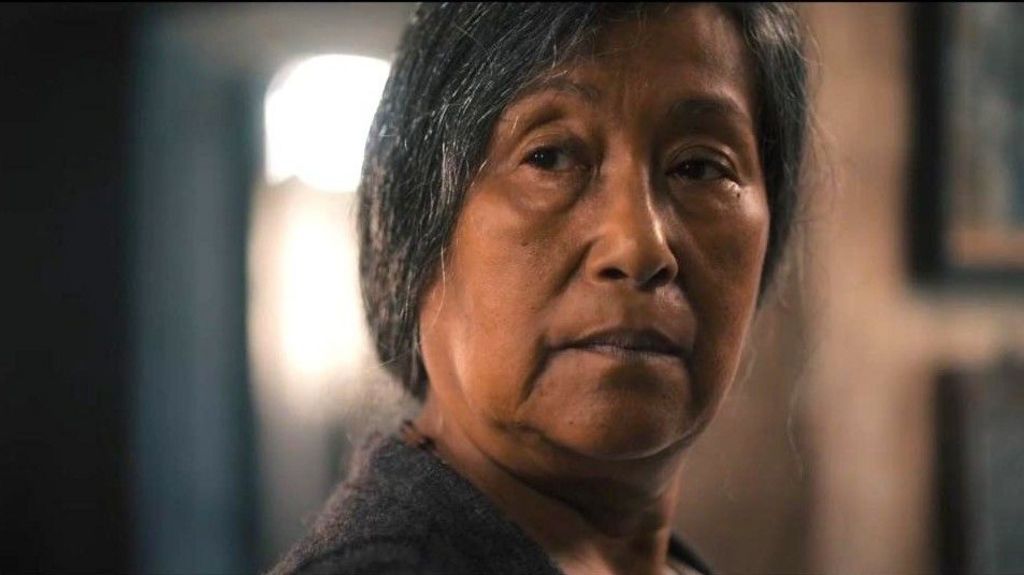
In an extraordinary late-life career transformation, Biana Watre Momin, a 70-year-old retired English literature teacher from India’s northeastern Meghalaya state, has emerged as an unexpected cinematic sensation. The former educator from the Garo Hills community, who had never acted professionally, embarked on a remarkable 3,000-kilometer journey to Kerala to star in the critically acclaimed Malayalam film “Eko,” now streaming on Netflix.
Momin portrays Mlathi Chettathi, an enigmatic elderly woman of Malay origin who flees World War II-era Malaysia and establishes a solitary existence in India’s Western Ghats mountain range. Her character inhabits a decaying forest home surrounded by feral dogs, while navigating mysterious visitors claiming familial connections. The film’s title plays on the concept of “echo,” reflecting both the atmospheric setting and the thematic resonance of Momin’s performance.
Director Dinjith Ayyathan and cinematographer Bahul Ramesh conducted an extensive search across India’s northeastern states to find an actor who could authentically represent Malay features. Their discovery of Momin—who had previously appeared in a short film about Garo folklore—proved fortuitous. Despite never having received formal acting training and initially hesitating due to the considerable distance from home, Momin embraced the challenge with encouragement from her daughter.
The production presented significant obstacles, including Momin’s need to learn Malayalam dialogue phonetically with coaching assistance, daily mountain treks through unpredictable weather, and adapting to professional filmmaking rhythms. Remarkably, the production completed principal photography within 45 days on a modest budget.
Momin’s performance has drawn widespread critical praise, with Tamil actor Dhanush describing it as “world-class.” Industry professionals have noted her intuitive understanding of emotional nuance, camera positioning, and movement, which she attributes to life experience and her background in a matrilineal society. Following the film’s success, Momin has received additional script offers from Bollywood and other regional film industries, though she remains thoughtfully cautious about future projects.
Now returned to her family life in Meghalaya, where she cares for four dogs and participates in her local book club, Momin represents cinema’s capacity to discover authentic truth rather than manufacture it. Her journey stands as testament to the creative possibilities that can emerge when filmmakers look beyond conventional casting choices and embrace unconventional talent.