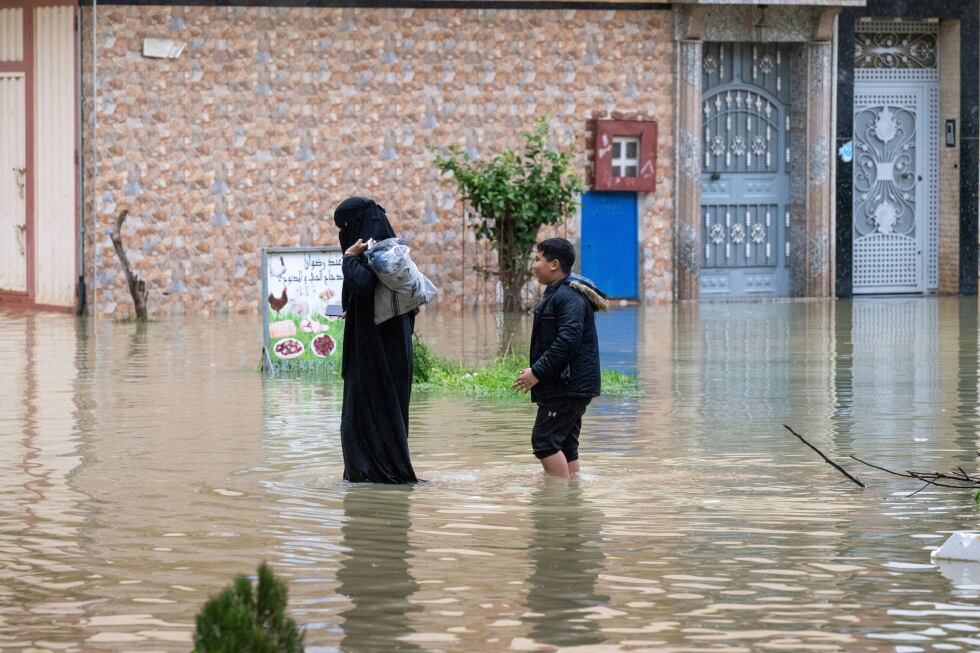
RABAT, Morocco — Moroccan authorities have mobilized military units to execute one of the nation’s largest emergency evacuations, relocating over 140,000 residents from northwestern regions as catastrophic flooding submerges urban areas and agricultural lands. The Interior Ministry confirmed the mass displacement Thursday after torrential rainfall triggered dam overflow and severe river swelling.
The Loukkous River and its tributaries breached their banks following what meteorologists describe as ‘exceptional’ climate conditions, forcing controlled water releases from critically saturated reservoirs. The Oued Al Makhazine dam near Ksar El Kebir—a key agricultural hub renowned for sugar production—discharged over 372 million cubic meters of water after exceeding its 672.8 million cubic meter capacity by 46%.
Urban centers have transformed into ghost towns, with Ksar El Kebir experiencing 85% depopulation as residents fled to government-established shelters or relatives’ homes. Witness footage obtained by The Associated Press reveals structural collapses and landslide devastation in the mountainous community of Bni Zid, where earthmoving equipment struggles to clear debris from isolated roadways.
The hydrological emergency presents a paradoxical crisis for the North African nation. While ending a seven-year drought cycle and securing drinking water reserves for approximately one year, the deluge has devastated avocado, potato, and olive cultivations while paralyzing transportation networks. Maritime operations between Moroccan and Spanish ports face significant disruptions, with rising Sebou River levels halting rail services and submerging infrastructure.
Climate data reveals Morocco received 150 millimeters of precipitation during the past six months—surpassing annual averages by 32.5%—prompting the national meteorology directorate to issue red alerts for impending rainfall. Emergency protocols remain activated as officials balance reservoir management against continued precipitation in what represents both a water security breakthrough and humanitarian challenge.