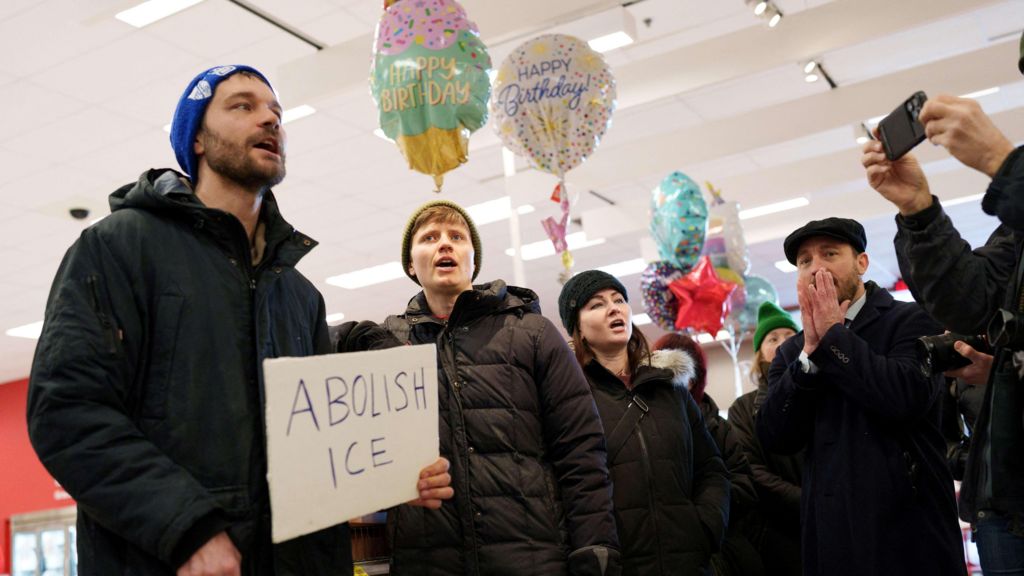
Amid escalating tensions over immigration enforcement, major Minnesota corporations led by retail giant Target are confronting unprecedented employee unrest. The core conflict stems from workers’ demands for clearer corporate protocols when Immigration and Customs Enforcement (ICE) agents appear at workplaces, creating a complex intersection of legal compliance and employee protection.
The situation reached a critical point following January’s detention of two Target employees at a Minneapolis-area store, where masked agents subdued workers in the store’s entryway. This incident triggered mass employee action, including an internal letter signed by over 300 staff members demanding executive intervention and stricter limits on ICE access to corporate properties.
Seventy-one-year-old cashier Sandra Macmillan resigned in protest, citing Target’s initial silence as “the last straw” after witnessing viral videos of the arrests. Her departure symbolizes growing worker dissatisfaction across multiple industries, including hospitality and construction, where companies like Hilton, Home Depot, and DR Horton face similar pressures.
The corporate response has been complicated by legal ambiguities regarding property access rights and the Trump administration’s aggressive “Operation Metro Surge” initiative in Minneapolis. While Target’s new CEO Michael Fiddelke addressed community violence in internal communications, the company has not publicly commented on the specific ICE incidents, reflecting the delicate balance businesses must maintain between employee safety and legal compliance.
Legal experts characterize property access regulations as a “murky” area, particularly regarding quasi-public spaces like store parking lots. While judicial warrants are required for non-public areas, the rules remain ambiguous for other spaces, forcing employers into difficult risk assessments.
The administration’s response has been unequivocal: when a Hilton franchisee refused to rent rooms to ICE agents, the Department of Homeland Security publicly condemned the action as law enforcement obstruction. Hilton subsequently severed ties with the franchisee, demonstrating the substantial business risks involved.
Worker advocacy groups including Unidos Minnesota and the ICE Out Now Coalition have organized protests and strikes, arguing that major employers have both moral and economic responsibilities to protect their workforce. The United Food and Commercial Workers Local 663 reports widespread anxiety among members, including U.S. citizens concerned about racial profiling during enforcement actions.
As the situation evolves, Minnesota businesses find themselves caught between employee safety concerns, legal obligations, and political pressures, creating one of the most challenging workplace dynamics of the current administration’s immigration enforcement era.