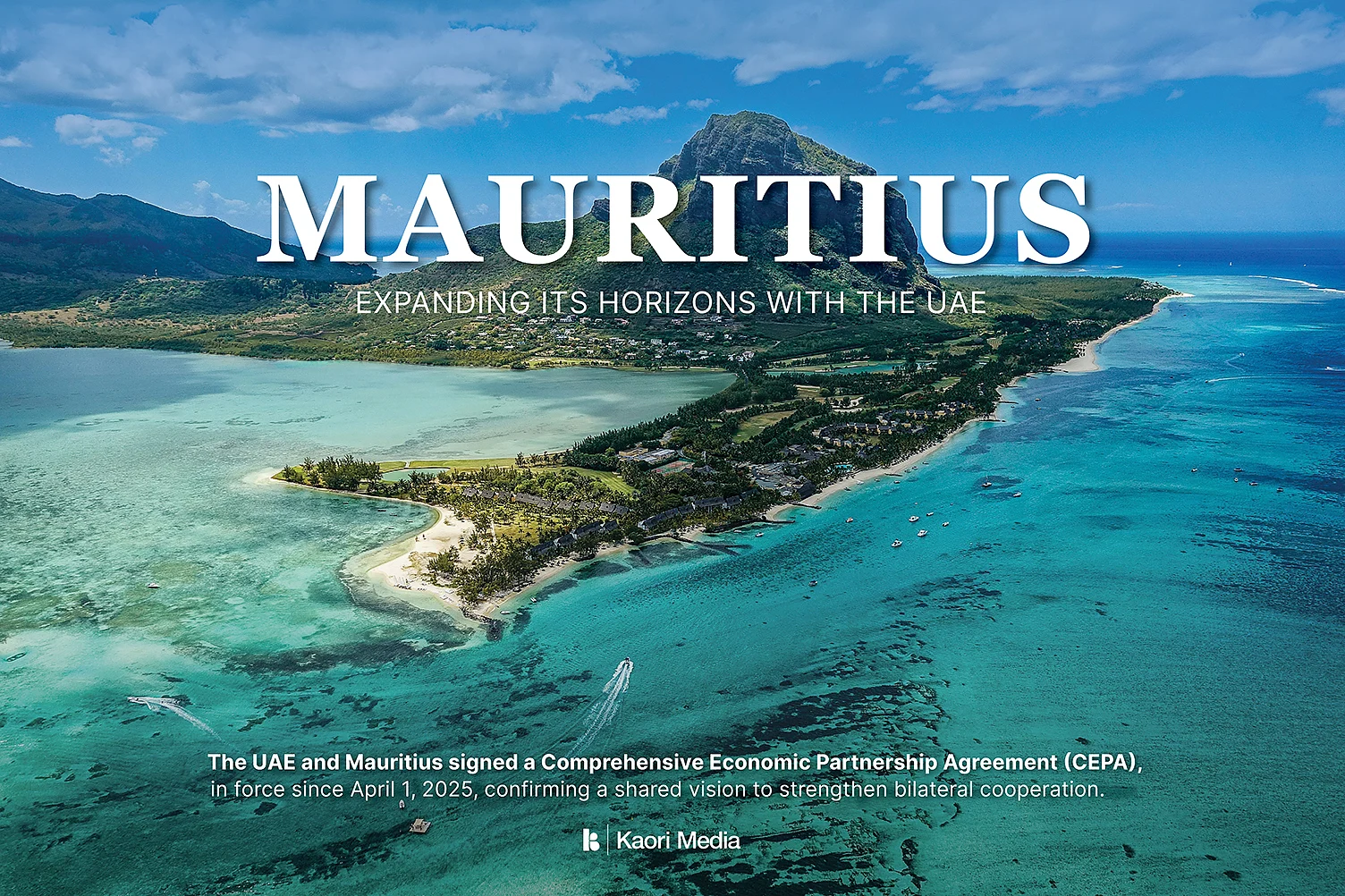
Mauritius has strategically transformed from a luxury tourism destination into Africa’s premier investment and financial hub, achieving this remarkable evolution through visionary policy-making, strategic alliances, and an advanced financial services ecosystem. The island nation now solidifies its position as a crucial international financial center connecting Africa, the Gulf, and Asian markets.
The implementation of the UAE-Mauritius Comprehensive Economic Partnership Agreement (CEPA) on April 1, 2025, represents a groundbreaking development in interregional economic relations. As the UAE’s first African CEPA partner, Mauritius establishes a precedent for Gulf-African cooperation, facilitating enhanced economic integration across trade, investment, finance, tourism, and technology sectors.
Guiding this transformation is Vision 2050, Mauritius’s dynamic national roadmap designed to elevate the country to advanced economy status by mid-century. This living framework adapts to global uncertainties, technological disruptions, and climate challenges while prioritizing future-oriented sectors including artificial intelligence, fintech, digital services, medical sciences, and renewable energy. The strategy emphasizes governance excellence, skills development, social inclusion, and fiscal sustainability to ensure competitive, resilient, and inclusive economic progress.
The CEPA agreement is projected to more than double non-oil bilateral trade from $210 million to $500 million within five years. Mauritius will eliminate 99% of tariffs on UAE imports, while the UAE will remove 97% overall, dramatically improving market access for goods and services. Beyond tariff reductions, the partnership enhances cooperation in investment facilitation, digital trade, logistics, and technology exchange.
Financial services remain fundamental to Mauritius’s economy, contributing over 13% of GDP and maintaining the island’s status as an international financial center. The jurisdiction offers a robust regulatory framework, a hybrid legal system combining Common Law and Civil Law traditions, and an extensive network of double taxation avoidance agreements with more than 40 countries. Ongoing reforms and digitalization initiatives strengthen investor confidence while the ecosystem evolves toward higher-value activities including fund management, fintech, sustainable finance, and cross-border investment structuring.
While tourism remains vital with 1.44 million visitors generating $2.1 billion in revenues during 2025, Mauritius is strategically diversifying into luxury hospitality, wellness tourism, eco-tourism, renewable energy, smart agriculture, aquaculture, life sciences, and advanced manufacturing. This multi-sector approach enhances economic resilience while supporting climate and food security objectives.
With exceptional air connectivity, cultural openness, bilingual business environments, and a skilled workforce, Mauritius offers Gulf investors an unparalleled combination of stability, sophistication, and regional access. The country’s Indian Ocean location, legal certainty, and international partnerships position it as the natural bridge between the UAE, Africa, and global markets, redefining itself as both a premium destination and compelling investment platform for Gulf-African economic collaboration.